

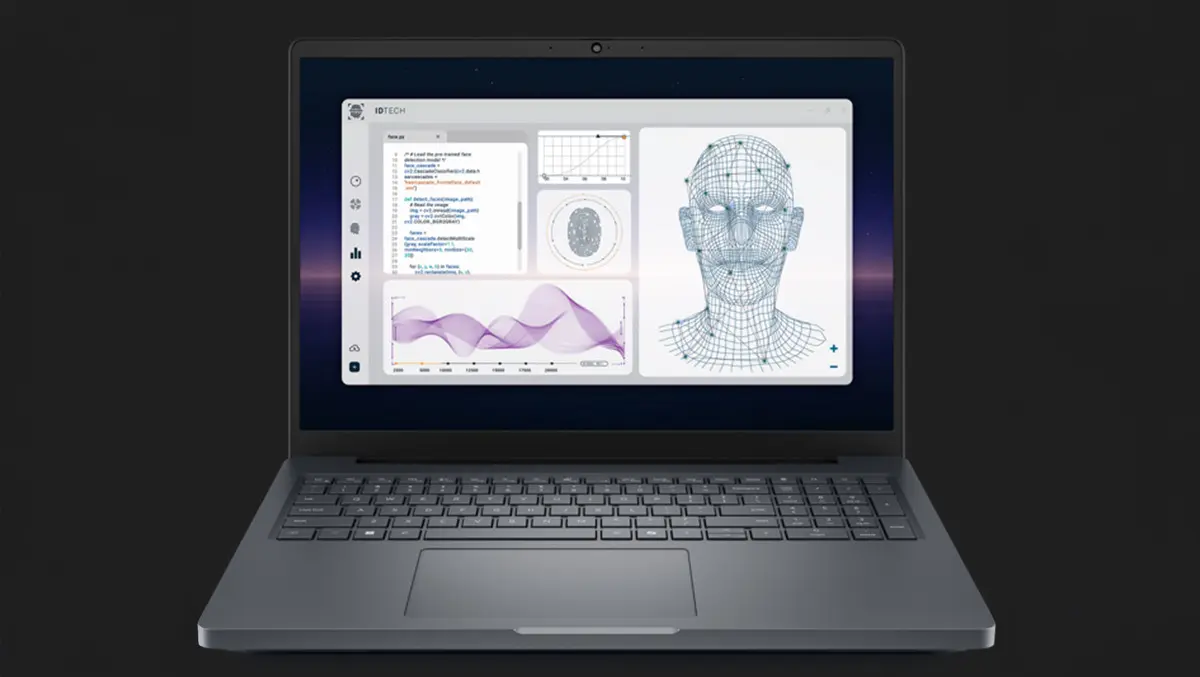
Dell unveils workstation with on-device enterprise AI inferencing
Mon, 24th Nov 2025
Dell Technologies has unveiled its Dell Pro Max 16 Plus, a mobile workstation featuring the Qualcomm AI 100 PC Inference Card. This machine is the first of its kind to include an enterprise-grade discrete neural processing unit (NPU), bringing datacentre-level artificial intelligence (AI) inferencing capabilities to a portable device. The system is designed to provide real-time, on-device AI model execution with no cloud dependency.
Dual-NPU architecture
The workstation employs a dual-NPU architecture, utilising two AI-100 NPUs on a single card. It includes 64GB of dedicated AI memory and supports AI models of up to around 120 billion parameters. The platform delivers sustained, high-fidelity FP16 performance, enabling advanced inferencing across a range of scenarios including healthcare diagnostics, financial analysis, and engineering workflows.
On-device inferencing
According to Dell, the inclusion of an enterprise-grade discrete NPU allows users to run complex and large AI models directly from the workstation. This approach removes reliance on cloud resources, reducing latency and enabling operation in environments with limited or no network connectivity. The on-device processing also minimises the risk of data exposure, supporting privacy and security requirements in regulated sectors such as healthcare and finance.
Security and privacy
By retaining sensitive data on the device, the Dell Pro Max 16 Plus offers a solution for organisations with strict data sovereignty or privacy concerns. The system's localised AI processing ensures that all inferencing, including handling of confidential documents and medical images, occurs without transferring data off the device. This can help maintain compliance with regulations while providing immediate analytical capabilities at the point of work.
Cost and mobility
The new workstation presents an alternative to ongoing cloud inferencing costs and usage-based fees. Its architecture is aimed at delivering predictable expenditure through one-time hardware investment. Portability is a core focus; the device supports use cases ranging from field diagnostics in healthcare to on-site engineering analysis in factories or autonomous system monitoring. Real-time decision-making is now available wherever the device is deployed.
Operating system support
The Dell Pro Max 16 Plus is compatible with both Windows and Linux environments, providing flexibility for different development stacks. It integrates with Dell's AI management tools on Windows, allowing IT administrators to oversee security and system updates as they would with standard corporate workstations. This offers organisations consistency across device management practices while deploying advanced AI workloads.
Industry applications
The workstation is targeted at several key industries. In healthcare, practitioners can analyse high-resolution MRI and CT scans locally, delivering rapid diagnosis in locations with unreliable connectivity. Financial analysts can process transactions and detect fraud in secure, air-gapped environments. Legal teams are able to manage document classification and redact sensitive information directly on-device.
Engineers and AI developers can benchmark, validate, and fine-tune models without waiting for remote processing queues. The hardware supports real-time sensor processing, suitable for robotics and computer vision applications that demand low-latency loops.
NPU versus GPU
The discrete NPU is differentiated from both integrated NPUs and traditional GPUs. Integrated NPUs typically accelerate basic operating system functions and are limited by memory and performance. In contrast, the discrete solution in the Dell Pro Max 16 Plus supports much larger and more complex models thanks to its dedicated memory and increased processing capacity.
Compared to GPUs, which are designed for training and graphics workloads, the NPU is purpose-built for sustained inferencing. As a result, it manages high-demand AI tasks with improved power efficiency and lower heat generation, suitable for continuous and reliable operation in enterprise settings.
"The Dell Pro Max 16 Plus with the Qualcomm AI 100 PC Inference Card keeps every inference private and under the users control by processing workloads entirely on-device," said Abigail Sloan, Senior Account Executive, Dell Technologies.