AI Safety stories
Public servants tested ChatGPT and Codex on drafting and research, as agencies weigh whether AI can speed up routine work without losing human oversight.
Australian users can now automate office tasks across apps and files as OpenAI rolls out ChatGPT Work and GPT-5.6 nationwide.
Weak public trust and tighter oversight are pushing Australian and New Zealand firms to add live AI security controls before systems go into production.
Poor governance is leaving many AI agents stuck out of production, while those that run can expose firms to legal and security risks.
The rollout puts image generation inside Meta's most-used apps, as the company broadens its AI tools for chats, stories and advertising.
A single benchmark score may be hiding sharp failures when users phrase data queries more vaguely, Google Cloud says.
Attackers are using agentic tools to compress breaches into days, exposing developers and cloud users to faster, harder-to-stop intrusions.
Businesses face a tougher test for AI agents as DevRev's new benchmark measures accuracy, cost and access controls in enterprise settings.
Enterprise buyers risk signing off on AI systems that only claim human oversight, while real-time intervention and auditability are often absent.
The controlled trial could help security teams cut false positives and speed remediation as frontier AI moves beyond finding bugs to validating risk.
Developers can now isolate AI-generated code and user scripts inside Cloud Run, reducing the risk of exposing credentials or host data.
The model can run for up to an hour at 720p and 60 frames per second, with real-time controls and multi-user interaction.
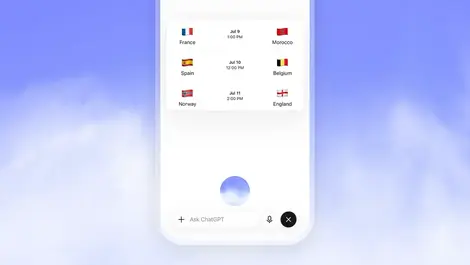
ChatGPT users worldwide will get more natural spoken exchanges, as the new full-duplex system listens and talks at the same time.
Businesses could see faster, cheaper AI coding and office workflows as OpenAI rolls out GPT-5.6 with stronger safeguards.
AI is helping hospitals cut scan times, clear backlogs and spot disease earlier, while doctors still keep final say over treatment.
Many workers are being left to learn AI on their own, with junior staff far less confident than senior leaders, a survey shows.
The Singapore startup is seeking stronger public-sector and industry links as it pushes its autonomous delivery software into buildings and logistics.
Users will now be able to track moles, UV exposure and skin changes over time as the app shifts towards preventive care and referrals.
Regulated industries may get a safer route to production AI as the tie-up offers tighter control over data, governance and deployment.
Nearly half of businesses have paused or scaled back AI projects as weak cost tracking leaves returns unproven and security gaps widen.