Decarbonisation stories
The Perth gathering will seek backing for power access and renewable projects as almost 750 million people still lack reliable electricity.
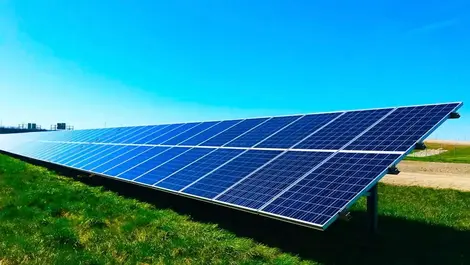
The charity expects lower power bills after linking rooftop solar at more than 30 sites to demand across its NSW network.
As climate shocks intensify, cities can cut outages and delays by linking water, power and transport into one view.
Supply bottlenecks for transformers could delay new data centres as Australia's AI boom intensifies pressure on the power grid.
Australian households are cutting bills by up to 80% after taking low-interest loans for solar, batteries and electric appliances.
External equity is being sought to fund a 700 MW Philippine renewable pipeline after Kaffee Energy completed its Wayu acquisition.
The project could cut emissions and reduce Denmark's reliance on imported winter produce by heating new greenhouse facilities with surplus data centre heat.
Rising electricity demand from AI and electrification is intensifying competition for power infrastructure talent, with AtkinsRéalis expanding its senior team.
Cloud migration helped NiCE cut Scope 1 and Scope 2 emissions by 23%, while it kept 14% of revenue flowing into research and development.
Australian researchers and students will gain access to Fujitsu's quantum systems in Japan under a pact aimed at building skills and applications.
Higher module costs are expected to squeeze developers as India races past its annual solar installation record and tightens local sourcing rules.
The proposed 250 MW facility could bring fresh jobs and new renewable generation to Taranaki, but it still needs consent, finance and tenants.
Higher renewable output and the Manawa Energy purchase lifted annual earnings, while Contact Energy eyes new demand from a proposed Taranaki data centre.
The move should cut electricity bills and emissions, with Oxford Area School among 500 schools to get rooftop panels over three years.
The award could help steelmakers cut fuel use and emissions by replacing hours-long simulations with near real-time software decisions.
Rising charging gaps and price concerns are pushing buyers towards hybrids, with the global market forecast to reach USD $465.4 billion by 2033.
About 10,000 public charge points by 2030 remain the target as the Government adds NZD $21 million to spur chargers in underserved areas.
Canterbury households could face higher power bills as regulators test whether Orion's NZD $1.51 billion network spend is justified.
The Manchester firm can now push its sheep wool insulation panels towards commercial use, with live building trials and testing funded by a GBP £75,000 award.
The shortlist highlights UK startups in biotech, energy, health and AI as investors and buyers look for scalable technology beyond Cambridge.