Graphics Processing Unit (GPU) stories
The deal puts a major open AI model hub under Nvidia's control, raising questions over whether its neutrality will survive intact.
Governments and regulated firms can now keep agentic AI on their own systems, reducing cloud dependence and tighter data controls.
Warning signs are mounting around AI spending, with one expert saying the likely fallout is a correction that leaves little enduring value.
The deployment will help AWS meet surging demand for AI computing as the cloud giant deepens reliance on NVIDIA hardware and robotics.
Cloud builders could gain more compute headroom, as NVIDIA shifts memory control off the chip and opens NVHBM to multiple suppliers.
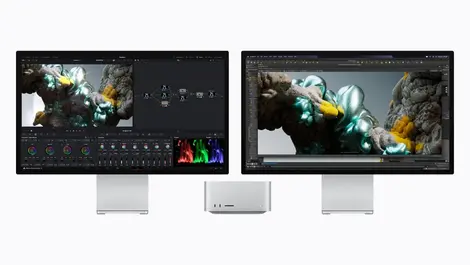
Faster on-device AI and new connectivity are now central to Apple's smallest desktop, with models aimed at creators and developers.
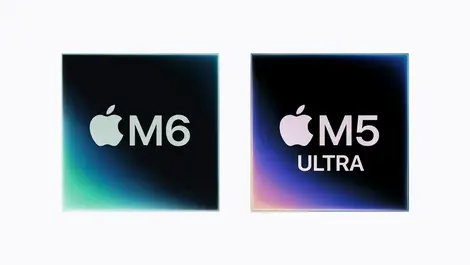
New AI tools and faster media workflows are the focus as the updated desktop adds M5 Max and M5 Ultra chips plus Wi-Fi 7.
Mac users tackling AI and graphics-heavy work will get more local muscle, as Apple's latest desktop silicon pushes memory and compute higher.
Australian firms can speed month-end processing from days to an hour by running Kiraa AI on Macs instead of costly cloud servers.
It lets cloud operators pair custom XPUs with NVIDIA's rack-scale systems, aiming to cut delays and integration costs in AI build-outs.
Energy-constrained AI operators could run far more agentic tasks after NVIDIA said Vera Rubin systems deliver up to 30 times higher throughput per megawatt.
Enterprises could cut GPU use and power costs as the open-source bundle lets Akida neuromorphic chips share IBM's scheduler for inference tasks.
The new feature could cut Spark job runtimes by up to 4x, easing cloud bills for firms running data-heavy AI and analytics workloads.
Linux gamers will get smoother access to streamed titles, as Nvidia moves GeForce NOW out of beta and trims cloud gaming lag.
Customer demand is outstripping near-term AI compute capacity as the pair line up power, data halls and GPUs to speed deployments.
Businesses need not necessarily rush to replace working PCs for AI, as Dell says those with accelerators can still handle workloads.
The pay-per-minute service could cut testing costs for teams that need to check apps across many handset types and screen sizes.
The startup gains faster access to scarce AI compute as it prepares to scale model training across both TPU and Nvidia systems.
Enterprise buyers in Saudi Arabia will get a locally hosted AI PC from September 2026, alongside Adobe's shift to sovereign workloads.
The deal underscores how scarce power and land have become for AI expansion, with OpenAI planning a huge Ohio facility over 20 years.