Online Safety stories
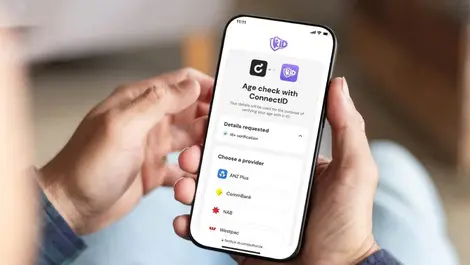
ConnectID and k-ID partner to enhance child safety on Australian gaming platforms with privacy-focused age verification and parental controls.
Electronic Frontiers Australia sharply criticises the Age Assurance Technology Trial's final report, highlighting privacy flaws and overstated age verification claims.
The Regional Connectivity Symposium in NSW highlights digital inclusion, unveiling CASPER AI to boost online safety and connectivity in regional communities.
Nearly 80% of Australians have faced scam communications recently, yet 70% lack knowledge on how to respond safely, reveals new Optus research.
Proofpoint warns AI-powered scams are rising, targeting people with malicious links across email and messaging, urging a human-centred defence approach.
Most Australians fear rising cybercrime sophistication, yet many small businesses cut cyber security spend, risking vulnerability amid digital trust concerns.
VexTrio, unmasked as a multinational ad-fraud empire with nearly 100 companies, runs scams worth billions across adtech and beyond.
Two-thirds of UK parents back a government plan limiting children's daily social media use to two hours, reveals a new Uswitch Broadband survey.
UK parents now prefer restricting digital access over grounding, with 35% confiscating phones and 31% switching off WiFi to discipline their children.
UNiDAYS and Instagram have partnered to launch verified school banners on profiles for 18 million US college students, enhancing trusted connections online.
Cyber criminals are increasingly using AI tools to enhance ransomware attacks, complicating defences for individuals and organisations alike.
StarHub launches ScamSafe app in Singapore to block scam calls and SMS, offering free six-month access before a monthly subscription begins.
EE launches a free P.H.O.N.E. Contract to help nearly four million UK families set smartphone rules and ease device-related arguments.
Wikipedia has lost its UK High Court bid to avoid new Online Safety Act rules requiring user verification on its platform.
Spark launches the Kids Plan, a NZD $20 monthly mobile plan with parental controls and access to digital parenting resources for families.
Headspace Invaders, a free interactive platform, helps Kiwis aged 12-16 tackle online harm through games teaching resilience and critical thinking.
Google uses machine learning to enhance safety for users under 18 in the US, applying new age-based protections across its platforms automatically.
Cyber scams in New Zealand have surged 77,721% amid rising AI use and crypto fraud, with sextortion and phishing attacks also sharply increasing in Q2 2025.
The UK government plans to impose a two-hour daily social media limit for under-16s to tackle youth compulsive behaviour and online harms.
New Zealand children face rising cyberbullying risks as 23% turn to AI companions for support, study finds amid earlier digital device use by youngsters.