Water stories
Sue O'Connor appointed Independent Board Chair of ATN, bringing extensive board and business leadership experience in tech and sustainability.
South Australia's first state satellite has successfully completed the Critical Design Review (CDR), moving it closer to providing tangible data solutions.
Australian e-waste is causing devastating environmental impact, with only 1% of TVs and 10% of PCs being recycled.
Empired lands AU$59m contract with Water Corporation for digital workplace and infrastructure managed services.
Talend announces support for Amazon Redshift Serverless, enabling better analytics and validation of high-quality integrations and governance solutions.
Vertiv recognises exceptional contributions from Australia and New Zealand channel partners, expanding partner recognition to include new categories.
Emerson has expanded its global agreement with Dragos, which includes validating Dragos Platform within its DeltaVTM distributed control system (DCS).
Huawei says its next-generation data centers will be powered by PowerPOD 3.0, which reduces the footprint by 40% and cuts the energy consumption by 70%.
NTT has launched its IoT Services for Sustainability offering, a stack of solutions to help businesses reduce their carbon footprint using IoT connectivity.
It's been a little a while since I've tried a new pair of wireless earphones, mainly due to a couple of rough experiences with them in the past.
New Zealand Government invests $200k in new climate forecasting tool to help farmers prepare for dry conditions.
New lows for ransomware attacks, an increase in nation state attacks, a decline in critical infrastructure defences, and 2022 becoming the year of the defender.
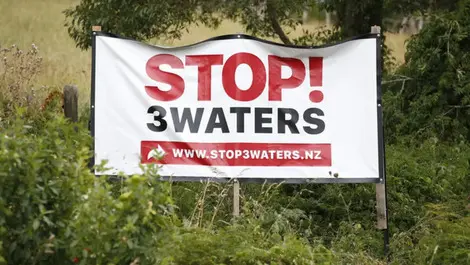
National warns that the cost of merging local councils' water service IT systems for three waters reforms may exceed $500m.
Digital Edge will use Nortek's StatePoint liquid cooling technology in its new data center, the first commercial colocation operator in Asia to do so.
Councils and opponents remain split as the Government's water overhaul promises public ownership but keeps co-governance in place.
Metered Auckland households use far less water than unmetered districts, where per-person consumption can reach 800 litres a day, the report says.
Projects saving time, money and emissions were among eight winners at the 2021 IPWEA NZ Asset Management Excellence Awards.
Plastic pollution in rivers, oceans and wastewater systems could finally face tougher global rules after nearly 200 countries backed a UN treaty.
Poor sanitation and water management are emitting methane, while better policy could help cut climate pollution and expand clean energy.
The government’s plan could cut household costs, but councils fear losing control over water assets as a 30-year fix is pursued.