

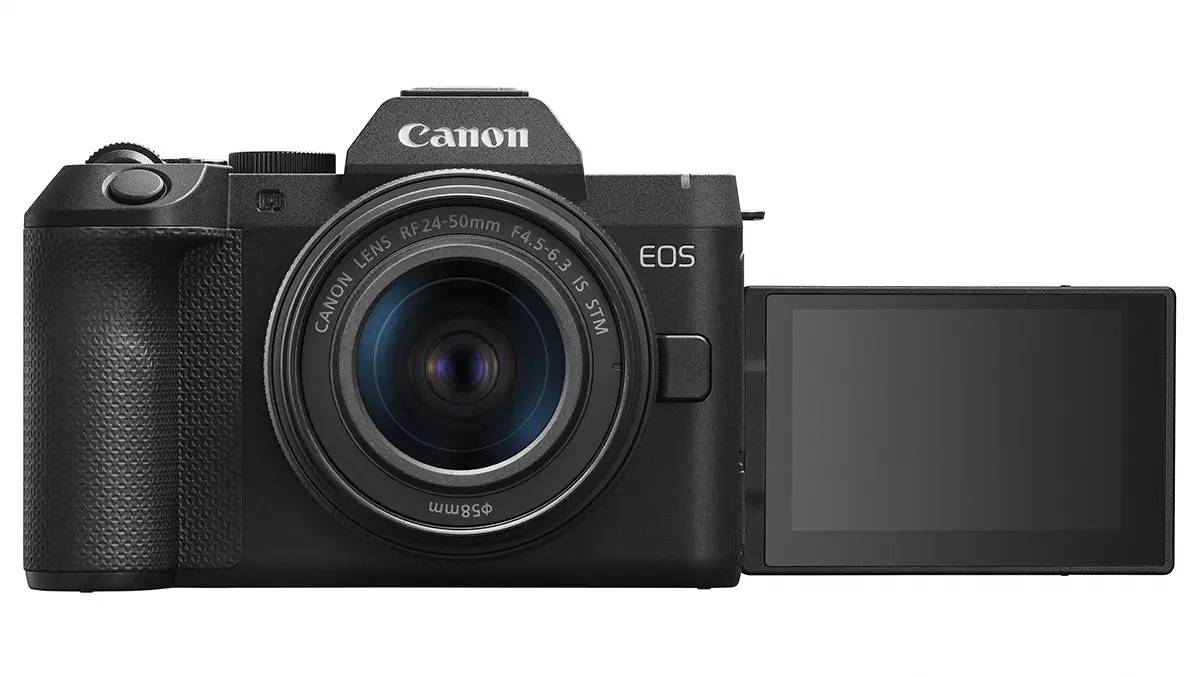
Canon launches EOS R8 Mark II & Speedlite EL-5 Ver.2
Wed, 16th Sep 2026
Canon has launched the EOS R8 Mark II full-frame mirrorless camera and the Speedlite EL-5 Ver.2 wireless flash in Australia, targeting travel and hybrid content creators.
The EOS R8 Mark II adds in-body image stabilisation to Canon's R8 line and introduces what Canon calls Dual Pixel 3D imaging technology. It weighs about 499g and pairs a 24.2-megapixel full-frame CMOS sensor with the DIGIC X processor.
The release comes amid continued competition in the mirrorless camera market, as manufacturers try to attract buyers with smaller full-frame bodies that can handle both stills and video. Canon is positioning the R8 Mark II as a step up from the original EOS R8 for users who want more control in a compact format.
The camera offers up to 7.5 stops of in-body image stabilisation, continuous shooting at up to 40 frames per second and a pre-continuous shooting mode that records about half a second before the shutter is fully pressed. The buffer can handle up to 73 RAW files in a single burst.
Autofocus is based on Dual Pixel CMOS AF II, with subject detection for people, animals and vehicles. The EOS R8 Mark II also includes Register People Priority, which lets users register up to 10 faces in the camera and up to 100 on a memory card so the system can prioritise selected people in the frame.
According to Canon, autofocus works in light levels as low as EV -7.5, matching the level it associates with its flagship EOS R1 model.
Video focus
Video is central to the product's pitch. The EOS R8 Mark II records 4K at up to 60p oversampled from 6K, while Full HD can be shot at up to 180 frames per second for slow-motion footage.
Canon has also included Canon Log 3, Hybrid Log-Gamma and a Cinema View aspect ratio option. Movie Digital Image Stabilisation is intended to help users filming handheld, while USB livestreaming support expands the camera's use beyond travel photography.
The camera also adds colour and portrait tools, including Picture Styles, Filmtone Colour Filters and a Smooth Skin effect intended to reduce the need for editing after capture.
One of the more unusual additions is the Dual Pixel 3D imaging function. Canon says the EOS R8 Mark II is the first camera to include the technology, allowing users to capture JPEG images containing depth information and convert them into 3D content using Canon's Dual Pixel 3D Converter App for Windows.
Design changes
Canon has revised the physical layout with what it describes as a streamlined EOS design. The EOS R8 Mark II adds a multi-controller, a change from the EOS R8, and supports customisable buttons, controls and modes.
An optional EG-E2 Extension Grip will be sold alongside the camera. Canon says the accessory improves handling and adds a separate tripod socket while still allowing direct access to the battery.
Connectivity features include Wi-Fi on 2.4GHz and 5GHz bands, Bluetooth 5.3 and USB-C with data transfer speeds of up to 10Gbps. USB-C also supports charging and power delivery, giving users the option of using a power bank during longer shoots.
Flash update
Alongside the camera, Canon has updated its Speedlite EL-5 flash. The Ver.2 model extends wireless transmission range to up to 50 metres, from 30 metres on the original EL-5.
The change is intended to make off-camera flash setups easier to manage in larger venues and outdoor locations. The revised flash reflects a broader effort by camera makers to keep accessories aligned with increasingly mobile shooting workflows.
In Australia, the EOS R8 Mark II body is priced at AUD $2,529, while a kit with the RF 24-50mm f/4.5-6.3 IS STM lens costs AUD $2,859. The EG-E2 Extension Grip is priced at AUD $169 and the Speedlite EL-5 Ver.2 at AUD $639.
Canon says the EOS R8 Mark II supports a range of RF lenses, including the RF 24-105mm F4-7.1 IS STM, RF 45mm F1.2 STM and RF 100-400mm F5.6-8 IS USM, giving buyers options from general-purpose zooms to telephoto use for wildlife and distant subjects.
The new model is aimed at users who want the image quality of a full-frame sensor without moving to a larger body, with in-body stabilisation and faster shooting standing out as the clearest upgrades over the EOS R8.