

Epson courts councils with live printer speed test
Tue, 3rd Nov 2026 (Today)
Epson will stage a live printer demonstration at the Local Government Information Technology South Australia Conference and Gala Awards in Adelaide, focusing on its Heat-Free business inkjet range for local government technology buyers.
The display places an Epson WorkForce Pro EM-C800 beside a comparable laser printer and invites delegates to start both machines with a single button press. The aim is to show how quickly each begins producing the same document during short print jobs.
That focus reflects the kind of work common in council offices, where staff often print small batches rather than long production runs. Typical examples include permits, meeting agendas, customer letters and rates notices checked before wider distribution.
Epson argues that these shorter jobs can expose a weakness in laser devices, which need to warm up before the first page appears. Its case is that a business inkjet system without a fuser reaches output faster and uses less electricity because it does not rely on heat during printing.
Local government focus
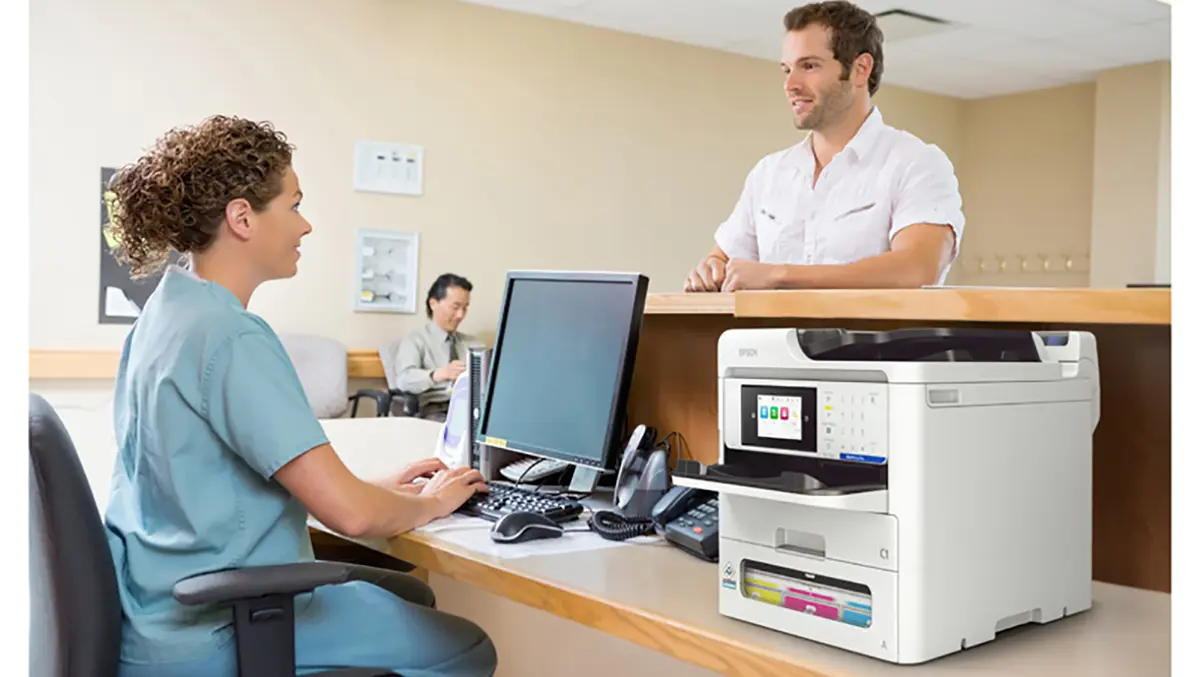
Epson is using the WorkForce Pro EM-C800 as the main device in the side-by-side test. It describes the machine as an A4 colour business inkjet for departmental workloads, with duplex printing, scanning, copying and faxing in one unit.
The model is also being presented as an option for councils replacing older office printers. Local government buyers may compare it with ageing departmental devices as part of routine fleet renewal cycles.
For council IT teams, the sales case centres on running costs, maintenance needs and energy use rather than headline speed figures. Epson says departments replacing older desktop printers may be able to consolidate devices into a smaller managed fleet that draws less power and requires fewer consumable changes.
It also points to waste reduction as part of that argument. Fewer replacement parts and less material sent to landfill could appeal to organisations with formal waste targets.
Procurement questions
The broader message targets the practical side of public sector procurement. Spreadsheet comparisons do not always capture the difference between rated print speeds in long runs and the real experience of producing a few pages at a time.
That distinction matters in local government, where finance teams, sustainability managers and IT departments can all influence purchasing decisions. A printer fleet sits at the intersection of operating cost, energy consumption, maintenance planning and day-to-day service delivery to staff and residents.
Over 11 years, LGITSA has developed into a forum for information technology and information management professionals across South Australian local government. The event attracts technology specialists, executive leaders and geospatial professionals, giving suppliers a concentrated audience involved in systems decisions.
Epson's presence reflects the replacement cycle facing many councils. Many delegates are likely to be weighing whether to keep, replace or retire existing equipment as fleets approach end of life.
Energy and timing
Energy use is likely to be a prominent topic. Public bodies face greater scrutiny over operational spending and sustainability reporting, and office equipment is one area where procurement choices can affect both electricity bills and environmental targets.
By removing the heat-based fuser used in laser systems, Epson says its inkjet approach reduces power demand during operation. That argument may resonate with buyers trying to cut ongoing running costs without overhauling wider infrastructure.
At the same time, Epson is betting that print responsiveness remains a deciding factor for staff who use these machines every day. A delay of a few moments before the first page arrives can be more noticeable in office routines than a rated pages-per-minute figure achieved over a long continuous run.
The conference programme covers digital transformation, cyber security, artificial intelligence, information management, data governance and business systems. Against that backdrop, Epson is positioning office printing as a visible area where a hardware change can affect cost, energy use and the day-to-day experience of public sector staff.
The live comparison on the stand is intended to make that case directly, with council delegates invited to judge the result by pressing the button themselves.