

Samsung debuts glasses-free 3D Spatial Signage in Australia
Tue, 24th Feb 2026
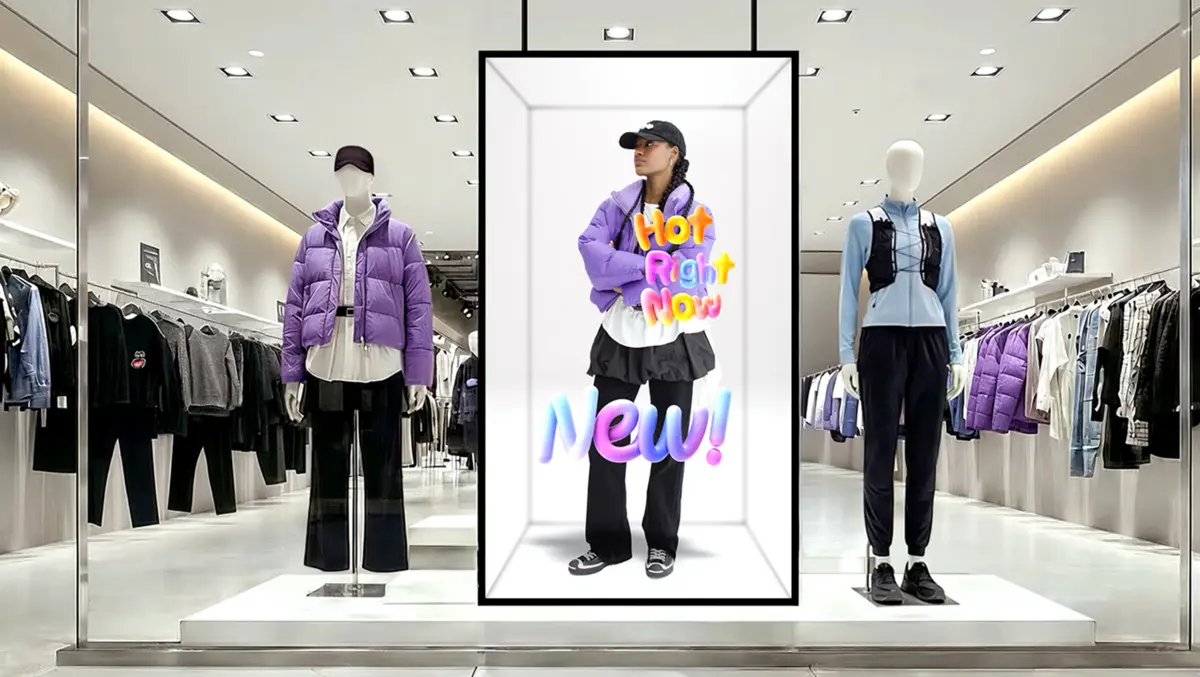
Samsung has expanded its commercial display line-up in Australia with Spatial Signage, a glasses-free 3D digital signage range aimed at retail and other public venues.
The range will roll out in three sizes over the year, starting with an 85-inch model. Samsung is positioning it as part of a broader shift towards more dynamic visual formats and faster content production for commercial screens.
"As commercial environments continue to evolve, integrating display technology with smart content solutions has become critical," said Shawn Kwon, vice president, Integrated B2B at Samsung Electronics Australia.
Glasses-free 3D
Spatial Signage delivers 3D effects without 3D glasses or other specialised viewing equipment. The screens use Samsung's patented 3D Plate technology to create a sense of depth behind the LCD panel.
Samsung says the approach retains the sharpness of 2D assets while adding a 3D look. It is targeting venues where brands want to draw attention to specific products or messages, including retail, luxury, museum and entertainment settings.
Samsung also pointed to early use cases it expects in Australia, including duty-free stores, department stores and sports stadiums. "With glasses-free 3D Spatial Signage supported by AI-powered Samsung VXT, we're helping businesses deliver more immersive and engaging experiences across a broad range of commercial use cases. With that, we are now seeing early use cases spanning duty free shops, department stores and sports stadiums - where 3D content is bringing the 'Wow' factor, enhancing a customer's experience. We're proud to be empowering businesses with Spatial Signage products - Australian businesses can now be very creative with their own customer engagement, as by bringing 3D into the main stage, content can be delivered in a much more intuitive environment," said Kwon.
First model
The first device in the local rollout is an 85-inch Spatial Signage display. It has 4K UHD resolution (2,160 x 3,840) and a 9:16 portrait format, which Samsung says suits rotating visuals showing multiple angles of a product or scene.
The display uses a Samsung Quantum Processor, which Samsung says delivers 4K upscaling, 16-bit colour mapping and HDR refinement. It also includes an anti-glare panel designed for brighter environments.
Built with a slim profile for wall installation, the unit is 52mm deep and weighs 49kg. It supports Samsung's Slim Fit Wall Mount, sold separately.
Content workflow
Alongside the hardware, Samsung is promoting a content creation tool called AI Studio. It sits within Samsung VXT, a cloud-based digital signage platform that combines content creation, management and remote device control in one system.
According to Samsung, AI Studio converts static images into signage-formatted video, with output automatically optimised for Spatial Signage. Samsung says this includes refinements such as improved shadow detail, margin adjustments and background treatments.
Samsung VXT is sold separately, and features may vary by region. AI Studio is expected to be available globally in the first half of 2026, with costs that may vary depending on usage.
Awards circuit
Samsung says Spatial Signage has already received industry recognition. It was named a CES 2026 Innovation Award Honouree in the Enterprise Tech category during its commercial debut at the show, and an IFA 2025 Innovation Award Honouree in the Best in Emerging Tech category.
Pricing and timing
Samsung says the 85-inch model will be available in Australia from April, with an RRP of AUD $28,530 including GST. A 32-inch variant is planned for July, followed by a 55-inch version in September. Pricing for those models has not been confirmed.