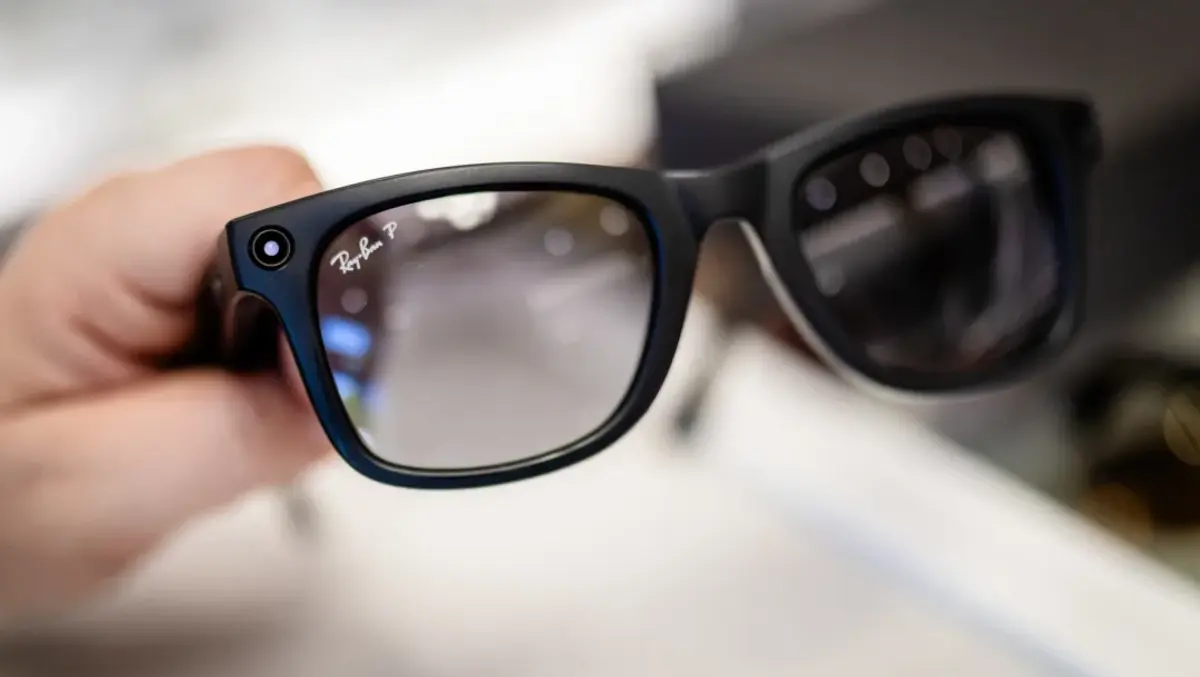
Smart glasses could make it easier for perpetrators of voyeurism to commit crimes.
Voyeurism, getting pleasure from secretly watching or filming people, has likely been an issue since the origins of mankind. However, with every leap in technology comes greater ease for perpetrators to commit crimes that are increasingly damaging for victims.
For example, the Crimes (Intimate Covert Filming) Amendment Act 2006, which covers voyeurism, was introduced in response to increased instances of "upskirting and downblousing," according to Dr Cassandra Mudgway, a senior lecturer at the University of Canterbury's law school. At the time, digital recording technology paved the way for perpetrators to install, say, small cameras on their shoes and walk around town recording up women's skirts.
Now, it's the popularisation of smart glasses from the likes of Facebook's parent company Meta. Wearers can film whatever they are seeing through a tiny camera in their glasses and upload images and video directly to the cloud. The products were copied by discount department store Kmart and sold for $99 since August, making the product type widely and cheaply available in New Zealand for the first time. Makers say the products are aimed at those who want to easily film and share moments of their life on social media.
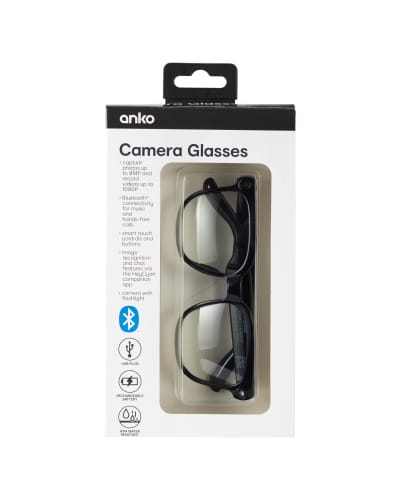
The Anko Camera Glasses. Supplied / Kmart
"Because they've been available overseas for a bit of time, we already have some pretty good evidence of what they're being used for in relation to voyeurism kind of activities," says Mudgway.
This includes instances where customers at brothels or massage parlours have covertly record their sessions for themselves later or to upload to social media.
"In the UK, a real big sort of trend has been pick-up content, so men would wear Meta-style glasses or other recording glasses that covertly record a woman in public to test out their pickup lines and they're usually making sexualised comments and then uploading that [to social media for entertainment].
Mudgway knew of only one New Zealand criminal case involving smart glasses, where a client tried to film his session at a brothel.
"It was only detected because the sex worker noticed him fiddling with the side of his glasses and he was kicked out."
The man was later discharged without conviction, Mudgway says.

Ruth Money. Supplied/Stephanie Creagh Photography
Children are particularly vulnerable, says Ruth Money, New Zealand's chief victims advisor to the government.
"Anything from in a school environment to a park to the neighbour popping over allegedly the neighbour might not be wearing those glasses for appropriate reasons, and then, you know, is recording a child."
Why could covertly filming someone be illegal?
The Crimes (Intimate Covert Filming) Amendment Act 2006 addresses voyeurism when a recording device is involved. The Act makes it illegal to create visual recordings without the knowledge or consent of the person being recorded in a situation where that person "would reasonably be expected to provide privacy..."
It is generally legal to take unconsented images and video of others in public places, but not in private places such as a public change room or a toilet and if that person is "naked, in underclothes, showering, toileting etc," says Detective Inspector Rebecca Cotton from New Zealand Police, in an earlier interview with RNZ about voyeurism.
Why is voyeurism and covertly filming someone a violation?
It's true that many victims of voyeurism will never know that a crime has been committed against them. It's also true that a perpetrator may never lay a finger on their victim, but that doesn't make the crime any less painful for those who know they have been recorded, says Money.
"It's violating because it is... somewhere where you should be safe and feel completely private and safe, and that's what sexual assault is - power and control - and that is why people feel incredibly violated and vulnerable."
How can you stop someone filming you with smart glasses?
Typically, smart glasses indicate they are recording with a light. For Meta glasses, that is a white light, and for Kmart smart glasses, that is a blue light. However, this can be disabled, says Mudgway.
There are apps you can install on your phone that will detect the Bluetooth signals from nearby smart glasses in the area around you, says Mudgway.
"Those apps are not foolproof. Sometimes they give false positives, and so they're not always correct."
However, neither warning system will help children, says Money.
"Could and should we be doing more as a community to regulate and ensure that children are safe to play at the pool, in the park? In their house when someone is visiting?
"Yes, we should and could be."
She is currently looking into whether the Fair Trading Act might prevent or regulate the sale of smart glasses in New Zealand due to the mental injury that sexual violence, including covertly filmed sexual material, can cause victims.
What to do if you think you are being recorded?
If you believe you are being recorded by smart glasses in breach of the Crimes (Intimate Covert Filming) Amendment Act 2006, you should report it to police by calling 105, according to Detective Inspector Cotton.
"Police would then assess the information provided to determine whether any criminal offending had taken place and/or if any further investigation was required."
If the incident occurs in a gym or a pool, inform the manager. This could result in the perpetrator losing their membership or facing a ban from the establishment, says Mudgway.
"I've actually just looked at all of the gyms that have chains around New Zealand and seen that almost all of them have some kind of [voyeurism] policy.
"... even if nothing comes of it, I think it's really important that people understand that it's still a breach of your right to privacy and your right to personal dignity, even if there is no specific law that covers that, you still have those rights."
A civil suit - essentially suing the accused perpetrator - is also a possible but potentially expensive option, according to Mudgway.
"The difference between criminal and civil is that civil has a lower burden of proof, which means that you only have to prove that it's more likely than not that in that place [the victim] had a reasonable expectation of privacy versus a crime where it has to be beyond reasonable doubt."
Finding help if you're a victim of voyeurism
New Zealand still has room for improvement when it comes to reducing the burden on victims and survivors when it comes to seeking help, says Money.
"When your world is turned upside down, when you are violated, and there is a trauma response, it means that you don't necessarily think rationally or in a linear fashion anymore."
When you report a crime to the police, they can refer you straight to local agencies such as rape crisis centres or women's centres that help victims of sexual crimes. However, sometimes referrals fall through the cracks or agencies lack the funding to truly help all referrals, says Money.
Victims can also self-refer to those agencies, including Victim Support, a national organisation that supports those who have experienced various crimes. ACC's Sensitive Claims Service accepts self-referrals and provides help for mental harm caused by sexual assault or abuse. The Safe to Talk hotline is another avenue for help.
"I do acknowledge it's difficult being a survivor and navigating the system, so I just want to encourage people not to be afraid to ask for help because it is out there," says Money.
"It does exist."