

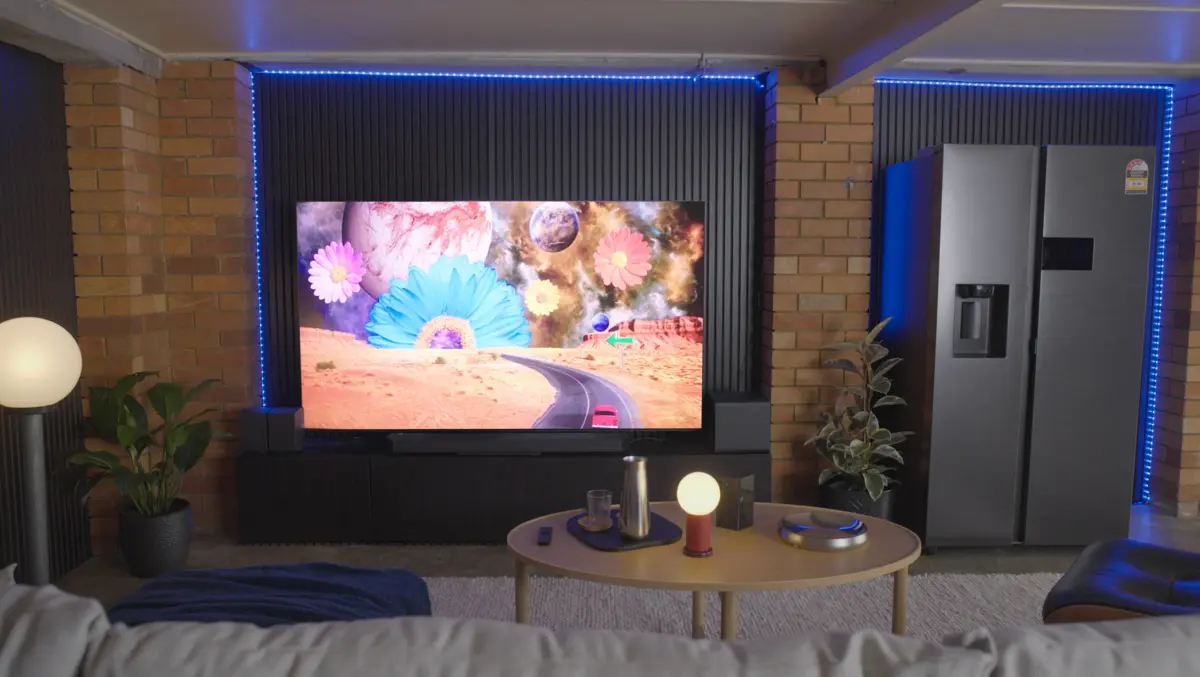

Samsung Australia has released research showing that 91% of Australians prefer watching sport at home rather than attending stadium events, pointing to a broader shift in how local audiences choose to experience live sport.
The findings suggest cost, comfort and access are reshaping viewing habits as demand for major events continues to exceed ticket supply. The study found that 79% of respondents have chosen to watch sport or entertainment from home because attending live events has become more expensive.
That shift is also driving interest in dedicated home entertainment spaces. According to the research, 83% of Australians would like to convert an unused room or garage into a viewing area for sport and entertainment. Meanwhile, 41% already see their garage as a space with entertainment potential, while 40% mainly use it for storage.
More than 20 million Australians, or 72% of those surveyed, said the right technology and entertainment set-up could make watching sport at home feel as special as being at the venue. Samsung commissioned the research from Pureprofile, which surveyed 1,016 Australians.
Home set-ups
Large screens remain central to those ambitions. Almost six in 10 respondents said a big-screen television is essential for a home fan zone. Another 60% said a larger screen makes them feel more immersed, while 68% said it makes content look more lifelike.
Samsung has expanded its range of televisions measuring 98 inches and above, increasing the line-up from four models in 2025 to up to 10 by the end of 2026. The range spans Micro RGB, The Frame, Neo QLED and Mini LED models, reflecting a push to offer more options at the top end of the market.
Audio also featured in the survey responses. Nearly a third of Australians, or 31%, said an immersive sound system is essential to recreating a stadium atmosphere at home.
Food and drink were another part of the viewing experience highlighted by respondents. Some 43% said a dedicated fridge for food and drinks is a must-have feature in a home viewing space, while 21% said repeated trips to the kitchen interrupt the experience and 19% said they struggle to find enough fridge space for guests.
Second screens
The research also suggests viewing habits now extend well beyond the main television. Some 72% of Australians use a phone or another device while watching live sport, films or other entertainment at home.
That second-screen behaviour ranges from messaging friends and family to checking scores, statistics and updates during a match. More than one in four respondents, or 28%, said they use an additional screen to watch replays, highlights, bonus content or other entertainment at the same time.
The pattern underlines how sport viewing has become a connected activity rather than a single-screen experience. For consumer electronics groups, that creates an opening to sell not just televisions but broader combinations of screens, audio products, mobile devices and household appliances.
Phil Gaut, Head of Consumer Electronics at Samsung Australia, said the shift reflects how sport continues to bring households together even as viewing moves further into the home.
"For Australians, sport is far more than entertainment. It's a cultural ritual that brings families, friends and communities together, and technology is increasingly enhancing the experience and bringing sport to life in Australians' homes. We've observed growing demand for premium at-home viewing experiences, with more Australians investing in smart consumer electronics to help them feel closer to the action. This spans multi-display set-ups made up of TVs through to smartphones and appliances," Gaut said.
The company is using that argument to link entertainment spending with broader home technology purchases. In practical terms, the survey responses show consumers are thinking about televisions, sound systems, fridges and smartphones as part of one social set-up rather than as separate purchases.
Samsung also tied the findings to changes in Australian homes, particularly spaces no longer used solely for storage or parking. Garages, spare rooms and other underused areas are being reimagined as entertainment rooms, a trend that mirrors the wider rise of home-based leisure spending as audiences become more selective about travel, ticket prices and convenience.
For television makers, the emphasis on screen size is especially significant. Bigger screens tend to carry higher prices and margins, and they can drive related purchases such as wall mounts, soundbars and connected devices.
Gaut said Samsung sees that demand spreading across multiple product categories in the home.
"That's exactly why Samsung designs its TVs with innovations such as Glare-Free technology for bright rooms, AI-powered picture enhancement to elevate every moment, alongside connected home appliances and surround audio to deliver a stadium-like experience from the comfort of home, all controlled from the palm of your hand via a Galaxy mobile. Whether it's footy finals, cricket season or a major international event, Samsung is helping Australians experience every moment as it was meant to be seen. It's an exciting time for Samsung as we develop products made for Australians' spaces, lifestyles and passions, and bring immersive experiences into our homes and around loved ones," Gaut said.