

Contactile named Propel-AIR 2026 finalist for robot touch
Thu, 9th Jul 2026
Contactile has been named one of seven finalists in the Propel-AIR 2026 program, placing the Sydney robotics company in a national field focused on AI and robotics.
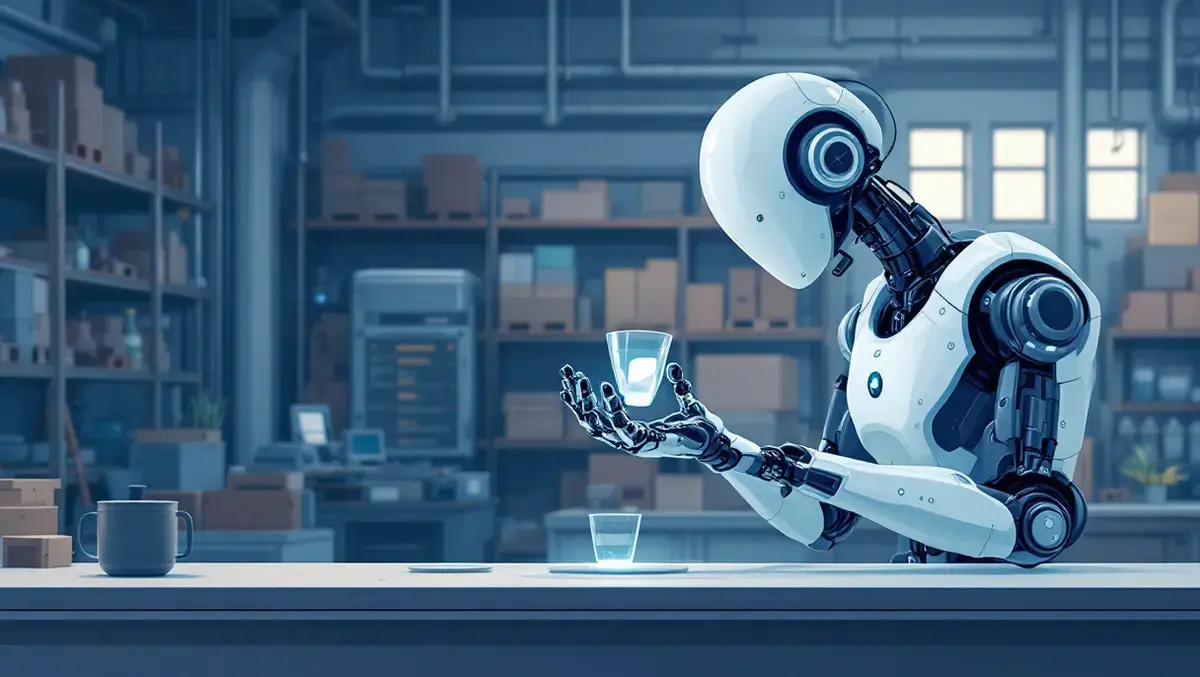
The company develops tactile sensing modules, control software and grippers designed to give robots a sense of touch when handling fragile, irregular or variable objects. The approach targets tasks where machine vision and force sensors alone have struggled to replace manual work.
At the centre of the system is its PapillArray tactile compute module, which interprets touch data and tells a robot how much force to apply when gripping. This differs from conventional tactile sensors, which often provide raw data that customers must process themselves.
The technology is intended to help robots avoid crushing or dropping items by adjusting grip in real time. It can also reduce the need for retuning or reprogramming across different objects and tasks, cutting engineering work and lowering failure rates for robot makers and systems integrators.
Chief Executive Officer and Co-Founder Dr Heba Khamis set out the company's view of the market.
"Touch is what makes robots useful in terms of dexterity and manual work," said Dr Heba Khamis, Chief Executive Officer and Co-Founder of Contactile.
She also described how the company positions its products in the robotics stack.
"Contactile is the tactile manipulation layer for physical AI," said Khamis.
Industrial focus
Contactile was founded in 2019 as a spinout from UNSW Sydney by Khamis, Benjamin Xia and Associate Professor Stephen Redmond. Its investors include True Ventures, Radar Ventures, Flying Fox Ventures and UNSW.
It now has more than 100 customers in more than 12 countries. Research customers include Carnegie Mellon University, Imperial College London and the Toyota Research Institute. Commercial customers include BMW Group, General Motors, Amazon, Samsung and Zeiss.
Sales are made directly and through original equipment manufacturer partnerships, with the technology embedded in third-party grippers and robotic hands. That model gives Contactile exposure to industrial automation, logistics, research and newer physical AI applications.
The broader backdrop is a rapid rise in investment in humanoid and mobile robotics. Contactile cited more than USD $14 billion raised by those companies in 2025 and pointed to supply pressure around force and tactile sensing components as robotics developers push to scale manufacturing.
Market timing
Khamis said the company's early start gave it time to refine the product before the recent surge of interest in physical AI.
"We were founded in 2019, long before the current humanoid wave started, and long before anyone was talking about physical AI," said Khamis. "We've used that time since 2019 to prove the technology, iron out things like manufacturability, durability and robustness."
She also used a navigation analogy to explain the difference between Contactile's module and standard tactile sensors.
"If you think of tactile sensing as somewhere on the spectrum of a compass to GPS, then the PapillArray is GPS plus Google Maps," said Khamis. "We develop these tactile compute modules, the control stack, and embed these modules natively into grippers and hands so that they can perform anticipatory control - preventing slip, not just reacting to it - while they're handling different objects and completing different tasks."
Being named a finalist adds another marker of recognition as companies across manufacturing and logistics look for robotics systems that can handle a broader range of objects. For many developers, the challenge has been less about moving robots around a workspace than enabling them to manipulate goods reliably in changing conditions.
That problem has become more visible as interest has shifted from fixed industrial arms to mobile robots and humanoid platforms. In those settings, dexterity and safe handling are central technical hurdles, and tactile sensing has drawn more attention from both builders and investors.
For Contactile, the immediate significance is its attempt to secure a position in a part of the supply chain that could become more important as robot developers seek better ways to manage grip, slip and breakage. More than 100 customers across more than 12 countries suggest there is already demand for systems that help robots handle delicate and inconsistent objects with greater control.