

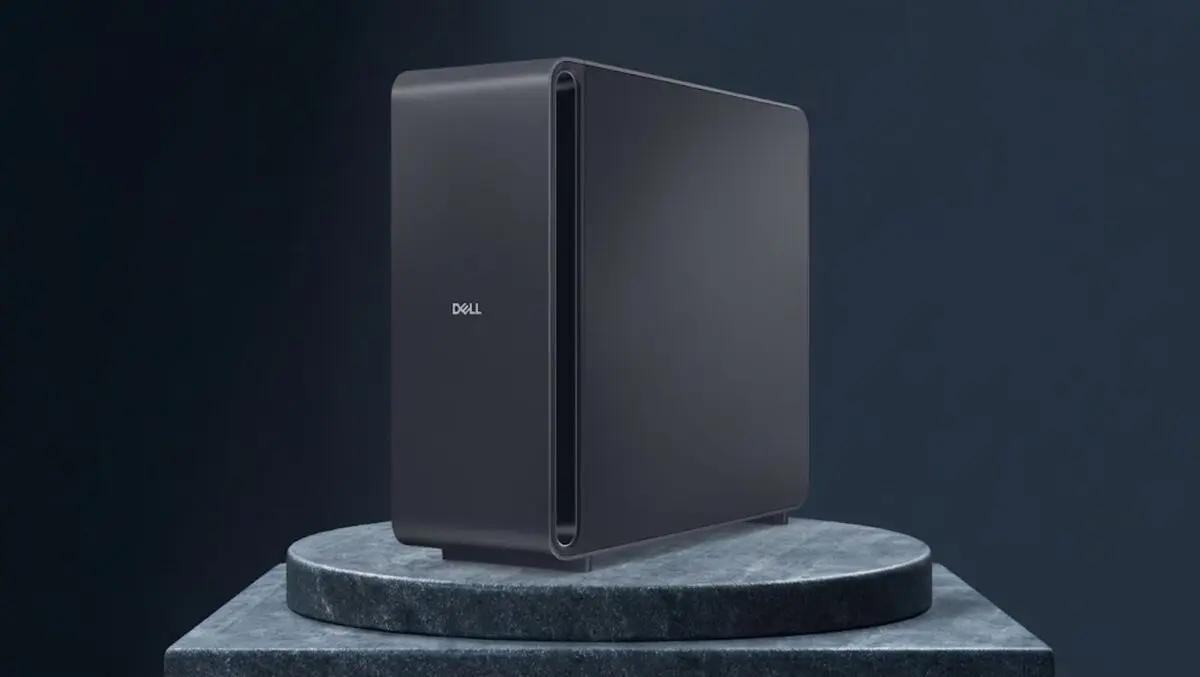

Dell has expanded its Windows PC and workstation range with the XPS 16 Creator Edition and the Dell Pro Precision with GB300, broadening its line-up for creators and enterprise AI development teams.
The XPS 16 Creator Edition is the first XPS laptop to use NVIDIA RTX Spark, while the Dell Pro Precision with GB300 will be offered with Windows for deskside AI development. Developed with NVIDIA and Microsoft, the additions come as companies seek more local AI computing rather than relying entirely on cloud infrastructure.
The announcement reflects a wider shift among hardware and software suppliers as they push AI tools directly onto end-user devices and workplace machines. For creators, that means laptops built to handle demanding editing, design and model work on the device itself. For enterprise teams, it means workstations that fit into existing Windows environments while supporting model development and deployment.
Creator focus
Dell positioned the XPS 16 Creator Edition for users working across creative software, AI development and gaming. The device combines an NVIDIA Blackwell RTX GPU with an NVIDIA Grace CPU and up to 128GB of unified memory in a 17.8mm chassis.
The shared memory design is intended to let users work with large 3D scenes, multi-layer 8K video timelines and larger AI models than would typically fit within the limits of more conventional laptop graphics setups. The machine also includes hardware support for real-time ray tracing, DLSS and native 4:2:2 encode and decode for video workflows.
The laptop includes a 3.2K tandem OLED display aimed at professional users who need colour accuracy. Dell said the panel offers 100% DCI-P3 colour gamut coverage, Pantone validation and factory calibration to Delta E below 2. It also supports a variable refresh rate from 20Hz to 120Hz.
For connectivity, Dell has included a full-size SDXC card reader, three USB4 Type-C ports with DisplayPort 2.1 and Power Delivery, HDMI 2.1b and a universal audio jack. The port selection suggests an effort to appeal to creators who still want direct support for cameras, external displays and audio equipment without adapters.
Windows development
The second product is aimed at enterprise development teams rather than individual professionals. The Dell Pro Precision with GB300, a renamed version of the system previously marketed under the Dell Pro Max brand, will be available with Windows rather than being limited to the Linux-based workflows more commonly associated with AI development.
That matters because many companies run productivity, engineering and creative work inside managed Windows environments, even though intensive AI workloads have often been built on Linux systems. Bringing the workstation to Windows lets IT departments deploy it through existing policies and management tools without changing operating systems or rebuilding internal workflows.
The workstation is based on the NVIDIA GB300 Grace Blackwell Ultra Desktop Superchip. Dell said it scales to 20 petaflops of FP4 compute and 748GB of coherent memory, with support for models of up to 1 trillion parameters running locally.
It will also support Windows Subsystem for Linux, allowing developers to access the NVIDIA CUDA ecosystem and Linux AI frameworks while still working within Windows. That is intended to reduce the need for dual-boot systems or separate development environments.
Portfolio shift
Dell also used the launch to bring its AI workstation products under the Dell Pro Precision name. The former Dell Pro Max with GB10 and Dell Pro Max with GB300 systems are now called the Dell Pro Precision with GB10 and the Dell Pro Precision with GB300.
The rebranding ties the new AI-focused systems more closely to Dell's established Precision workstation range, long associated with technical and professional computing tasks including simulation, rendering, 3D modelling and large data workloads.
Software support is another part of the strategy. Dell said RTX Spark Windows PCs will run native applications as well as x86 applications through Prism emulation. It listed Blender, DaVinci Resolve, Adobe Photoshop and Adobe Premiere as native applications, while MATLAB is supported through emulation.
For developers, the XPS 16 Creator Edition includes the full NVIDIA CUDA stack. Dell said tools including GitHub Copilot, Claude Code, ComfyUI and Cursor will run across RTX Spark systems, giving developers a local environment for prototyping, fine-tuning and inference work.
Dell also highlighted gaming support, saying Windows on RTX Spark supports anti-cheat systems including Easy Anti-Cheat and BattlEye, as well as the Xbox PC app. That broadens the machine's appeal beyond specialist creative and development use cases.
"AI is no longer something you build in the cloud and deploy later. It runs continuously, makes decisions and connects directly to the work people do every day. From a creator pushing the limits of a premium laptop to an enterprise team running always-on AI models at their desk, Dell, NVIDIA and Microsoft are delivering the compute to drive the agentic AI era," said Rob Bruckner, President, Client Devices, Dell Technologies.