

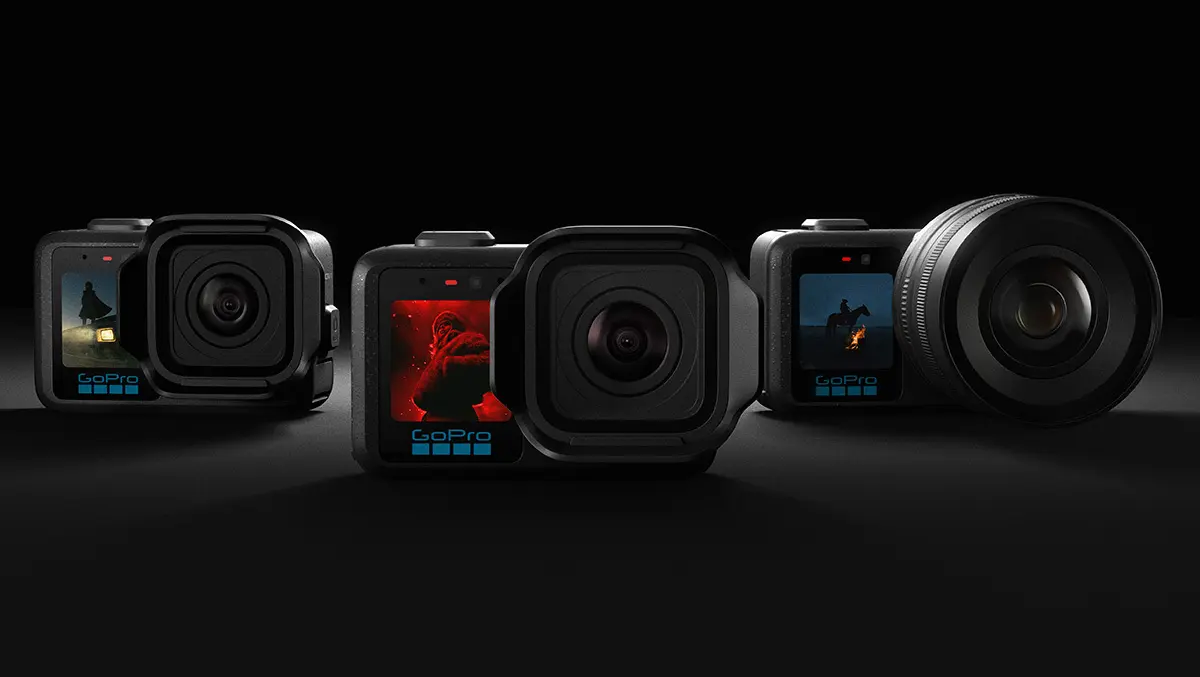

GoPro has not treated the Mission 1 range as a routine Hero update. The standard Mission 1 and Mission 1 Pro both use a 50MP 1-inch-type sensor, the new GP3 processor and a fixed 15mm equivalent f/2.8 lens.
The forthcoming Mission 1 Pro ILS uses the same core sensor and processor, but adds a Micro Four Thirds mount for manual-focus lenses. It is due later in Q3 2026.
That shift matters. The Mission 1 family is aimed less at casual action clips and more at creators who want a small camera that can fit into a broader production workflow.
The new focus is clear from the spec sheet. The Pro records 8K60 in 16:9, 8K30 in 4:3 open gate, 4K240 and 1080p960 burst slow motion. The standard Mission 1 reduces those headline numbers to 8K30, 4K120 open gate and 1080p240. It keeps the same sensor, processor, photo resolution, log options and rugged design.
On paper, the cheaper model looks less like a compromise and more like the sensible pick for buyers who do not need the most extreme frame rates.
Bigger body
The first practical change is size. Early hands-on reports describe the Mission 1 Pro as clearly chunkier than a Hero13 Black. That is not necessarily a drawback.
The larger body allows for a 2.59-inch rear OLED screen, a 1.4-inch front display and bigger raised buttons. The camera appears easier to control in bright light and less fiddly when you are moving quickly or wearing gloves. For a GoPro, that is a useful improvement.
The shape is still recognisably GoPro. You get built-in mounting fingers, waterproofing to 20 metres on the fixed-lens models and the compact toughness that has long defined the brand.
Handling has changed enough for the new Grip Edition accessory to stand out. It turns the camera into something closer to a point-and-shoot, which should suit travel, street shooting and casual handheld footage.
Better image
Image quality is the main reason to pay attention. The larger sensor and GP3 processor appear to deliver the biggest jump in GoPro image quality for years.
Early 4K footage has been described as attractive straight out of camera, with vivid colour, sharper corners than expected and a clear step up in dynamic range over the Hero13 Black. GoPro says the new sensor can reach up to 14 stops of dynamic range. The cameras also support 10-bit colour, HLG HDR and GP-Log2, giving editors more room to adjust footage in post.
Open gate capture is the more useful creative gain. On the Pro, 8K30 in 4:3 creates a tall master file that can be cropped later for 16:9, 1:1 or 9:16 output. That matters for creators cutting the same material for YouTube, Instagram and TikTok.
It also makes video frame grabs more viable. 8K open gate footage can produce 44MP stills, while 50MP RAW photos are treated as a proper part of the system rather than an afterthought.
Low light
Low-light performance has long been a weak point for action cameras. This is where Mission 1 makes its strongest case.
The bigger sensor, larger fused pixels in lower-resolution modes and newer processing combine to produce cleaner shadows and less visible noise than older GoPros. The improvement appears meaningful, though not miraculous.
That trade-off matters. A 1-inch-type sensor is a major step for a GoPro, but it does not turn the camera into an APS-C or full-frame rival. The Mission 1 cameras still use very wide lenses. They still prioritise survivability, stabilisation and speed.
If you shoot dark interiors often, a larger mirrorless camera remains the safer tool. If you need the smallest possible camera for awkward places, underwater work or moving mounts, Mission 1 makes a much stronger low-light argument than past GoPros.
Fast modes
The Pro model's speed options are extensive. 4K240 and 1080p960 burst recording are not just headline features. They let filmmakers isolate very short moments without switching to a specialist high-speed camera.
The base Mission 1 is still capable. Its 4K120 and 1080p240 modes cover most mainstream slow-motion work. The difference between the two fixed-lens models is less about core image quality and more about how often you need the outer edge of the spec sheet.
There are limits. Hands-on testing has shown that close focus and digital zoom can expose weaknesses quickly. A modest 1.6x digital crop can reduce detail in 1080p footage. Close-up shots can also slip out of focus, with no manual focus control on the fixed-lens models to correct them.
That is a reminder that these are still action cameras at heart. They work best wide, close to the action and within the limits of fixed-focus shooting.
Audio stack
Audio is another area where Mission 1 looks more serious than previous GoPros.
GoPro says the cameras use four microphones, 32-bit float recording, Bluetooth 5.3 audio support and USB-C audio support. The optional Media Mod adds a multi-pattern three-mic array, three 3.5mm ports, headphone monitoring and micro HDMI output up to 4K60.
That is well beyond what most buyers expect from an action camera. It shows GoPro is targeting creators who want to build a compact but complete rig.
The encouraging part is that internal sound already appears strong without extra kit. The four-mic array and wind reduction seem more dependable for quick pieces to camera and rough-location shooting than earlier GoPros. An external mic will still be useful, but it may not be essential for every job.
Staying power
Battery life may be the least glamorous upgrade, but it could be the most important in daily use.
GoPro claims more than five hours at 1080p30 and more than three hours at 4K30 from the new 2150mAh Enduro 2 battery. Early 4K60 testing has also shown strong endurance and no overheating during extended recording.
The older Enduro battery still works, although with shorter runtimes. That compatibility helps existing GoPro users, but serious Mission 1 buyers will want the newer battery.
There are workflow caveats. Unlike DJI's latest Osmo Action models, Mission 1 has no built-in storage. Serious 8K users will need fast, roomy microSD cards from day one.
The Quik app appears useful for phone pairing and light edits. GoPro also uses proxy files to keep 8K playback manageable on mobile, which is the sensible approach.
Price pressure
Like a lot of electronics, the price has increased. Those are not casual action-camera prices anymore. They put Mission 1 in competition with other specialist camera gear.
The pricing makes more sense when you stop thinking of Mission 1 as a holiday camera.
For people who need long runtimes, log recording, strong stabilisation, useful internal audio, 8K reframing and a body that can be mounted almost anywhere, the range looks more rational.
The standard Mission 1 may be the sweet spot. It keeps the shared imaging platform and bigger sensor, while giving up extreme slow motion that many buyers will rarely use.
Early verdict
The Mission 1 series looks like GoPro's clearest statement of intent in years. It does not abandon the brand's action-camera roots. It stretches them into territory that overlaps with compact vlog cameras and entry-level cinema tools.
The fixed-lens models remain wide-angle, rugged cameras first. That means they still have familiar limits around close focus, zoom and pure low-light flexibility.
Yet in image quality, handling, battery life and audio, they appear to move the platform forward in a meaningful way.
For buyers who just want a simple action cam, Hero still looks like the easier answer. For buyers who want a tougher, smaller camera with more serious video ambitions, Mission 1 is the more interesting choice.
GoPro has not simply built a better action camera. It has built a camera that asks to be judged by a different standard. On early evidence, that shift feels justified.