

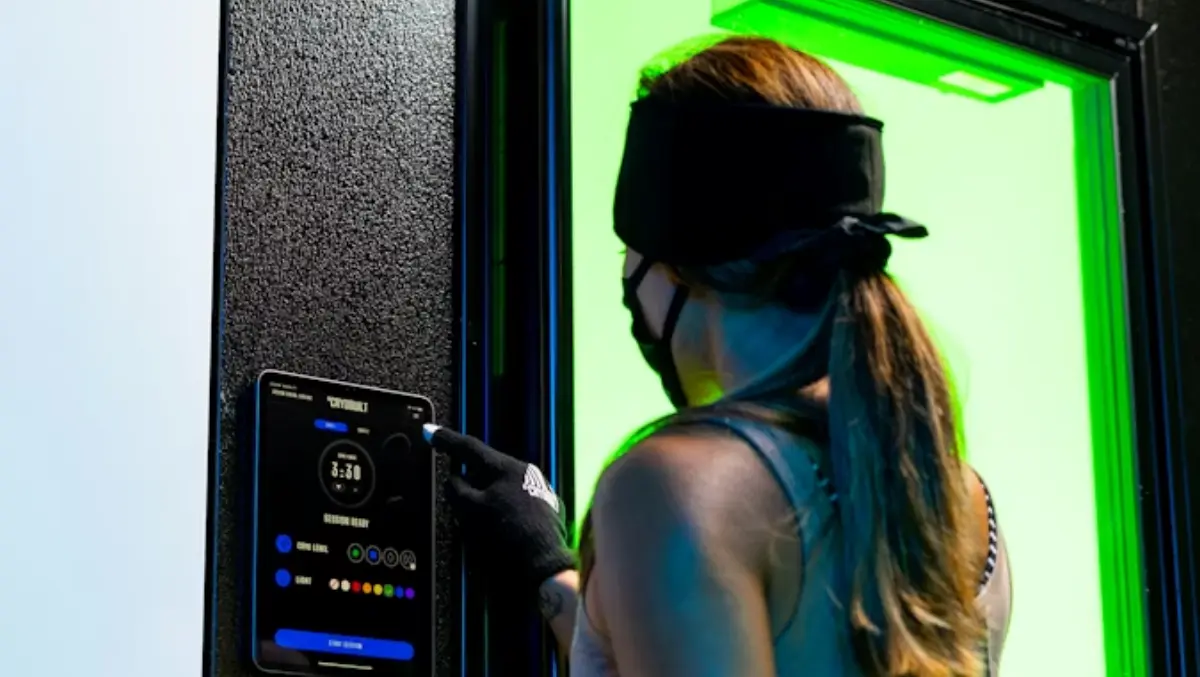
Inside the machine: How cryotherapy chambers are bringing biohacking to the mainstream
Tue, 5th May 2026
Two minutes and forty-five seconds. That's all the time it takes for a cryotherapy chamber to do something that athletic trainers, biohackers, and sports scientists have been chasing for decades: push the human body into a state of controlled, measurable, repeatable stress - and watch it come back stronger.
The chamber itself is a feat of engineering. Temperatures inside can plunge to -110°C, maintained by liquid nitrogen or refrigerant-based cooling systems depending on the model. The air is dry - critically so - which is what makes those temperatures survivable, even tolerable, for a human body wearing nothing more than gloves, socks, and underwear. In the time it takes to listen to one song, the body undergoes a cascade of physiological responses that researchers are still working to fully map.
For a long time, this technology lived exclusively in the back rooms of professional sports clubs and elite performance facilities. But that's changing. Studios like breathewrl.com.au in Adelaide are putting whole-body cryotherapy within reach of everyday Australians - and in doing so, they're democratising a category of human performance technology that was, until recently, available only to those with a pro sports budget.
So what's actually inside the machine? And how does it work?
The Engineering: How You Get a Room to -110°C
Modern cryotherapy chambers come in two main configurations: nitrogen-based and electric. Nitrogen systems use liquid nitrogen - stored at around -196°C - which is vaporised and pumped into the chamber to rapidly displace warm air and drive temperatures down. Electric systems, increasingly common in newer facilities, use multi-stage refrigerant compression to achieve similar temperatures without the need for on-site nitrogen storage.
Both systems face the same core engineering challenge: achieving rapid, uniform temperature drop across the chamber volume while maintaining precise control over exposure time and temperature floor. The tolerance margins are tight. Too warm and you lose the therapeutic effect. Too cold for too long and you risk tissue damage.
The user stands in the chamber with their head above the nitrogen vapour line - a critical safety design that ensures the breathing zone remains at ambient temperature while the body is exposed to extreme cold. Sensors continuously monitor chamber temperature and session duration, with automatic shutoffs built into all modern commercial systems.
It's a narrow engineering window - and getting it right is the difference between a therapeutic device and a dangerous one.
The Biology: What Extreme Cold Does to the Human Body
The moment the chamber door closes, the body initiates a survival response it hasn't meaningfully encountered in the modern world. Cutaneous cold receptors fire signals to the hypothalamus. Vasoconstriction kicks in immediately - blood vessels near the skin surface constrict sharply, rerouting blood to protect the vital organs at the body's core. Heart rate and blood pressure shift. The sympathetic nervous system activates.
Then comes the rebound. When the user steps out of the chamber, the body rewarms rapidly. Blood rushes back to the periphery, now oxygen-rich and carrying a flush of anti-inflammatory cytokines. Endorphins and norepinephrine surge - the latter by as much as 300% in some studies - creating the mood elevation and mental clarity that regular users describe as a natural high.
For athletes, the key mechanism is inflammation control. Exercise-induced muscle damage triggers localised inflammatory responses that cause delayed onset muscle soreness (DOMS) and slow the recovery cycle. Cryotherapy's systemic anti-inflammatory effect - acting on the whole body rather than a single muscle group - compresses the recovery window in ways that ice baths, the traditional alternative, struggle to match.
But the benefits extend beyond sport. Research has documented meaningful effects on sleep quality, chronic pain management, and mood regulation - making cryotherapy increasingly interesting to a broader population than its athletic origins might suggest.
From Pro Sports to Consumer Tech: The Democratisation of Recovery Hardware
Cryotherapy's journey to the mainstream mirrors the trajectory of other performance technologies that began in elite sport before filtering into consumer markets. Heart rate variability monitors, compression garments, altitude tents, sleep tracking devices - all followed the same path from professional lab to high street.
What's accelerating cryotherapy's mainstream adoption is a combination of factors: falling hardware costs, growing consumer literacy around biohacking and recovery science, and the rise of multi-modality wellness studios that bundle cryotherapy alongside complementary technologies like infrared sauna, float therapy, and red light therapy.
The studio model matters here. Whole-body cryotherapy chambers are capital-intensive pieces of equipment - a commercial-grade unit costs between AUD $80,000 and $200,000. That's not a home device. But at a per-session price point of roughly $50–$90, the technology becomes accessible in the same way that access to commercial gym equipment is accessible - you pay for the session, not the machine.
The clientele using these studios has shifted accordingly. Early adopters were overwhelmingly performance athletes. Today, the typical cryotherapy user is just as likely to be a shift worker managing chronic fatigue, a professional managing stress-related inflammation, or someone dealing with a musculoskeletal condition that conventional medicine has addressed only partially.
The Data Question: Can Cryotherapy Be Measured?
One of the more interesting evolutions in recovery tech is the integration of biometric data with session protocols. Wearables like WHOOP and Oura Ring now give users continuous visibility into heart rate variability, recovery scores, and sleep data - metrics that can be tracked before and after cryotherapy sessions to measure individual response.
This matters because cryotherapy response is individual. Some users show dramatic HRV improvements after a session. Others respond more modestly. The ability to close the loop between intervention and measurable physiological outcome is what separates modern recovery technology from the guesswork that characterised earlier approaches to performance optimisation.
Studios that lean into this data layer - helping users track their recovery metrics alongside their session history - are positioning cryotherapy less as a wellness treatment and more as a precision health tool. That's a meaningful distinction, both for user outcomes and for the long-term credibility of the technology.
The Bigger Picture
Cryotherapy sits at an interesting intersection: it's a technology with serious scientific credentials, a measurable physiological mechanism, and a growing body of peer-reviewed research - but it's also one that most Australians have never encountered, or have encountered only through the lens of celebrity endorsement and social media spectacle.
The more interesting story is the engineering and the biology underneath the spectacle. A chamber that can reliably hit -110°C in under a minute. A body that responds to two minutes of extreme cold with a systemic anti-inflammatory cascade. A recovery technology that was, fifteen years ago, available only to Olympic athletes - and is now bookable online, same-day, in an Adelaide suburb.
That's not wellness hype. That's a hardware story.