

OpenAI rolls out ChatGPT for Teens with safety in Australia
Wed, 19th Aug 2026
OpenAI has launched ChatGPT for Teens in Australia, making it the default experience for users identified as under 18.
The rollout adds new learning tools, tighter safety settings and more parental controls for teenage users of ChatGPT.
The move is a further step in OpenAI's effort to separate the experience for younger users from its wider consumer product. Users who state their age as between 13 and 17, or whom OpenAI's age-prediction systems estimate to be under 18, will be placed into the teen version automatically.
OpenAI said nearly 90 per cent of teens who use ChatGPT in a week do so for learning, finding information, building skills or productivity. The teen product is designed to focus on those uses while limiting exposure to material considered unsuitable for younger people.
Learning tools
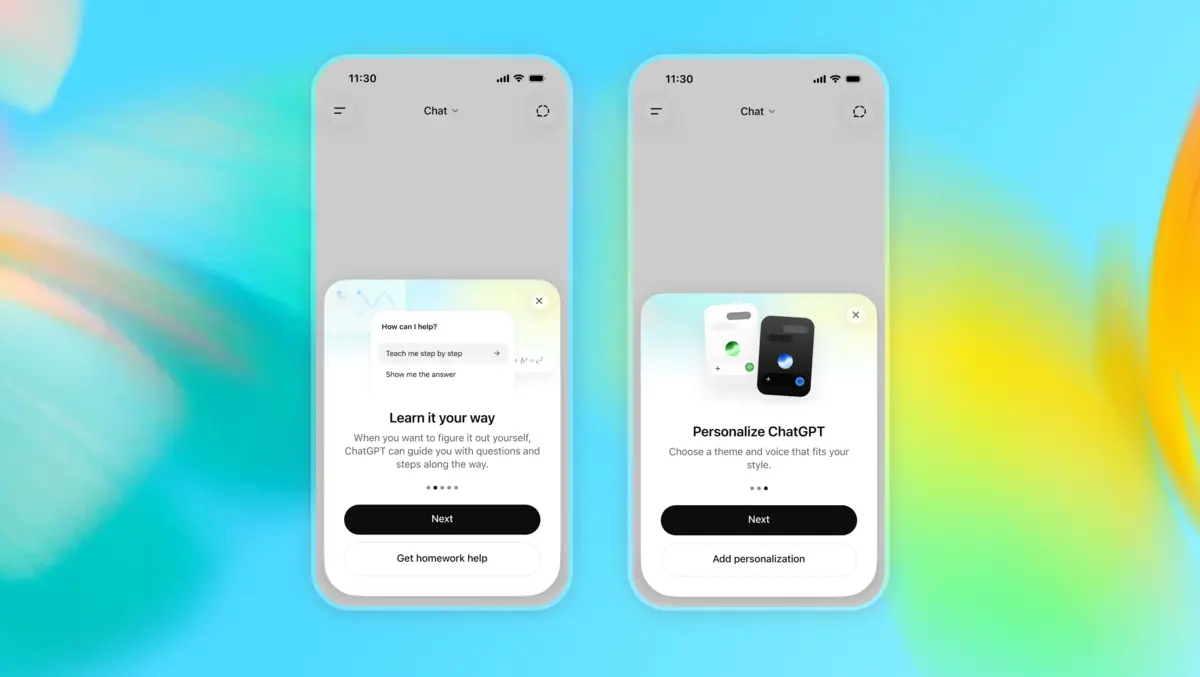
At the centre of the update is Study Mode, which guides users through problems step by step rather than providing only direct answers. OpenAI has also added quizzes, learning visualisations and a feature called Study Hours, which can switch new conversations into Study Mode at set times.
Homework reminders are designed to detect when a teen may be trying to avoid an assignment and redirect the user towards a more structured process. The aim is to keep students engaged in working through tasks rather than using the chatbot as a shortcut.
OpenAI framed the product as a tool for study outside the classroom, not a replacement for teachers. The learning design draws on work with teachers, scientists and pedagogy specialists, as well as research into active recall, self-explanation and step-by-step support.
Safety settings
For users under 18, the teen version applies what OpenAI described as age-appropriate safeguards in areas including self-harm, violence, eating disorders, dangerous activities, and explicit sexual or graphic content. Those restrictions are based on the company's under-18 rules for model behaviour.
OpenAI has also expanded features intended to promote healthier use. These include more frequent break reminders, prompts that clearly identify ChatGPT as artificial intelligence, and boundaries intended to reduce emotional dependence.
Its updated rules for under-18 users go beyond blocking romantic or sexualised roleplay. The system is not supposed to use romantic language, encourage emotional dependence or imply that it has feelings or consciousness.
Other prompts are aimed at discouraging risky behaviour in context. Teens will see reminders against uploading private or sensitive images, while onboarding for younger users will introduce the learning and safety settings from the start.
Parental controls
Parents with linked accounts can set quiet hours, manage selected features and receive notifications in some high-risk situations. They will not be given access to their teen's conversation transcripts.
Additional notifications have been added for eating-disorder-related situations. OpenAI said the system is designed to limit what is shared while alerting adults in cases where offline support may be important.
The launch also includes family resources in more than 50 languages, including a parent hub, a family guide to responsible AI use, and advice for discussions with teenagers about the technology.
OpenAI linked the rollout to a broader body of research on AI use by young people. It said it has started publishing more information on how its models perform against teen-specific tests covering sensitive subjects such as self-harm, violence, age-restricted goods and sexual content.
Brent Thomas, Head of Policy for Australia and New Zealand at OpenAI, outlined the company's position on teenage access to AI tools.
"We want teens to use AI responsibly to learn, create and explore. That means access should come with protections that reflect their developmental stage, reinforce relationships with trusted people in their lives and support healthy use over time," Thomas said.
He said the company had based the new product on guidance from outside specialists and internal standards for younger users.
"We've worked closely with experts to shape these features, guided by four commitments: put teen safety first, encourage real-world support, treat teens like teens, and be transparent about how our systems should behave. We'll continue building tools that help teens benefit from AI safely, and we'll measure and share what we learn along the way," Thomas said.