

ARIA conference backs licensing over AI copyright carve-outs
Thu, 26th Mar 2026
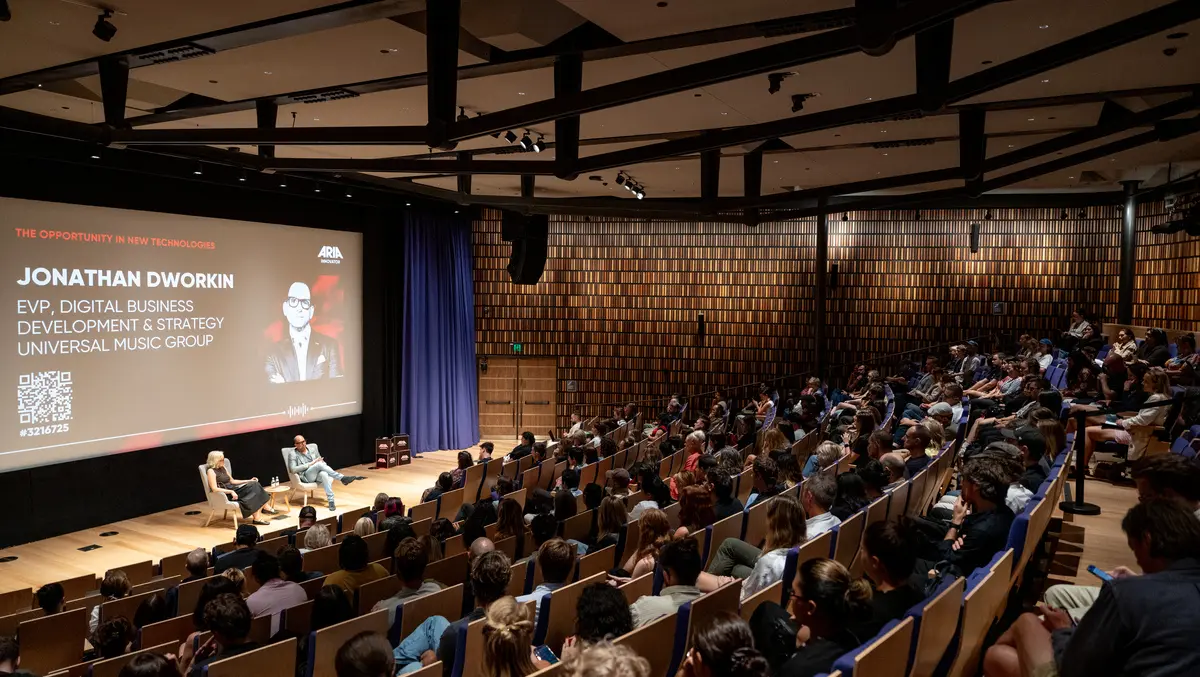
ARIA's Innovator conference in Sydney focused on licensing and copyright as the music industry's preferred response to artificial intelligence. More than 250 music professionals attended, organisers said.
Speakers from music, technology, gaming and media argued that AI should develop through commercial agreements with rights holders, not exemptions to copyright rules. Discussion covered licensing, gaming, media, creative leadership and the future of Australian music culture.
Jonathan Dworkin, executive vice president of digital business development and strategy at Universal Music Group, outlined the view from one of the world's largest music companies. "At Universal, running away from AI was never an option nor a consideration. The music business is in deep partnership with the technology business. We are determined to learn the lessons from our past and, instead of trying to fight the waves of innovation, understand how we can harness them to empower our artists. We can do much, much better - for artists, better for consumers, better for humanity - and we are demonstrating that it's possible."
He cited a series of Universal Music Group agreements as evidence that licensing is already taking shape in the market. "We didn't defeat piracy by turning off the internet. Ultimately, we prevailed because streamers built a better product than piracy. That's what we hope to do with AI."
Rights framework
Meng Ru Kuok, chief executive of BandLab Technologies and Caldecott Music Group, described copyright and licensing as established systems that can adapt to new technology. His company's platform serves more than 100 million creators worldwide, giving his comments added weight in a debate increasingly shaped by digital distribution and AI tools.
"The technology of copyright and licensing and IP rights has been developed over hundreds of years. Electricity is still around, and I believe it will be around for a couple hundred years more. Copyright legislation has continually evolved, but it's one of the most robust frameworks we have. The most important thing is respecting the way it's been created, and enforcing it."
Kuok also drew a distinction between platforms that treat royalties as a cost and those built around music audiences and creators. "Some companies see royalties and licensing fees as their cost of goods. The difference for a platform like ours is that we're targeting music fans, we're targeting emerging artists: it's not a cost, it's the whole point."
Gaming focus
The event also examined the overlap between music, gaming and new digital formats. Technology and gaming executive Cathy Hackl argued that Australia could benefit by moving early in those areas.
"If you have bold strategies around AI and gaming, and start to look at how some of the newer models can be harnessed, you can start to lead internationally. Australia has an extraordinary opportunity here."
Questions about how Australian music can retain its identity in a global market also featured. Errol Parker of The Betoota Advocate focused on the cultural effect of algorithms and internationalised taste.
"Localism matters. We look at some of our biggest songs that people sing at weddings: why is it so offensive to include a place name in a chorus nowadays? People feel seen and heard and relevant to what's being made. The dream here is, do we want an Australian music scene? Or do we want to send one away overseas, where they change their accent and just become generalised?"
Policy debate
ARIA used the gathering to sharpen its position in the policy debate over AI and copyright, arguing that licensing agreements between AI companies and music rights holders show existing copyright law can support new commercial arrangements.
Annabelle Herd, ARIA chief executive, said: "AI presents genuine new opportunities for the music industry, and licensing deals are emerging with major and independent labels globally, but these opportunities must be built on a foundation of consent, transparency and fair compensation. The hundreds of AI licensing deals already operating at scale prove our copyright system is working. Yesterday's presenters proved Australia doesn't need new copyright carve-outs or regulatory shortcuts to enable artificial intelligence: the music industry is open for business, and we're ready to do deals."
The conference was presented by ARIA with support from Sound NSW. The line-up included international and Australian speakers from music, media and technology, with sessions led by broadcaster Narelda Jacobs and music journalist Sosefina Fuamoli.
Support from the New South Wales government formed part of a wider investment in contemporary music through Sound NSW. John Graham, minister for the arts and minister for music and the night-time economy, linked the event to the state's ambition to strengthen its music sector.
"It's phenomenal to have ARIA playing this role, concerned not just about the immediate business but about the wider music ecosystem. We want Sydney to be a Music City. We want New South Wales to be a music state."