

Microsoft, Nvidia launch RTX Spark Windows AI PC lineup
Tue, 2nd Jun 2026
Microsoft and Nvidia have unveiled a new line of Windows PCs built on Nvidia RTX Spark, spanning laptops and small-form-factor desktops.
The rollout begins with devices from Surface, Asus, Dell, HP, Lenovo and MSI, as Microsoft pushes Windows on Arm into higher-end systems for developers, creators and gamers.
At the centre of the announcement is RTX Spark, a new Nvidia platform that can deliver up to 1 petaflop of AI performance, up to 20 Arm-based CPU cores, up to 6,144 Blackwell RTX cores and as much as 128GB of unified memory, according to Microsoft. Windows has also been tuned to work more closely with that heterogeneous design through changes to scheduling, power management and memory handling.
Those software adjustments include workload profile scheduling, which Microsoft says helps Windows distribute tasks more efficiently across the 20 cores, and support for the Microsoft Power and Thermal Framework. That framework is intended to improve the balance between performance, battery life and heat in thin-and-light systems.
Microsoft also highlighted changes to Windows support for unified memory. A higher limit on the amount of total system memory accessible by the GPU should allow larger local AI models and more demanding creative workloads to run on these machines. It is also changing page-size management in shared memory regions to improve performance under heavier loads.
Arm push
The launch marks another step in Microsoft's effort to broaden the appeal of Windows on Arm beyond mainstream productivity devices. Prism, its emulator for 32-bit and 64-bit x86 applications on Arm-based PCs, will be included and tuned for RTX Spark systems. Microsoft says it has continued to improve compatibility and speed.
Software support remains a critical factor for Arm-based Windows hardware, and Microsoft used the announcement to underline the range of applications it says are already available natively or through emulation. Creative tools cited include Blender, DaVinci Resolve, Maxon Cinema4D, Maxon Redshift, Topaz Photo, CapCut, Cubase, Bitwig Studio and Affinity by Canva. Adobe Photoshop and Premiere were also named as native apps, with additional optimisation under way.
For technical users, MATLAB now officially supports Windows on Arm through Prism, according to Microsoft. It also said AI development and coding tools such as GitHub Copilot, Claude Code, ComfyUI and Cursor run across modern PC silicon, with support planned for technologies including CUDA-accelerated PyTorch, llama.cpp, TensorRT, Hugging Face frameworks, Unsloth and Kohya.
Gaming focus
Gaming is another part of the strategy. Microsoft said native anti-cheat software from Epic's Easy Anti-Cheat and BattlEye, expanded Prism compatibility and support through the Xbox PC app would give buyers access to a broad PC games catalogue on RTX Spark devices.
Several titles were singled out as coming to the platform, including League of Legends, Valorant and PUBG: Battlegrounds, alongside compatible games such as Alan Wake 2, Naraka: Bladepoint, Pragmata and War Thunder. RTX Spark is also designed to benefit from DirectX 12 advances, including neural rendering and improved ray-tracing performance, Microsoft said.
The new systems will also sit within Microsoft's Copilot+ PC category, pairing dedicated AI processing on NPUs with the added graphics and AI work of the GPU. That combination is intended to support local AI workloads and a new generation of software agents running on-device rather than relying solely on cloud infrastructure.
That local execution model featured heavily in the announcement. Microsoft said Windows is being adapted to build and run agents securely, with operating system-level identity, containment and management features, while Nvidia is bringing OpenShell to Windows using those security primitives. Hermes Agent and OpenClaw are expected to integrate OpenShell into their Windows applications.
"NVIDIA and Microsoft share a vision that agents are the future of personal computing," said Jeff Fisher, Senior Vice President of Personal Computing, Nvidia.
"RTX Spark combines NVIDIA's full technology stack with Microsoft Windows and is purpose-built for creators, gamers and AI developers in the personal AI era," Fisher said.
Device range
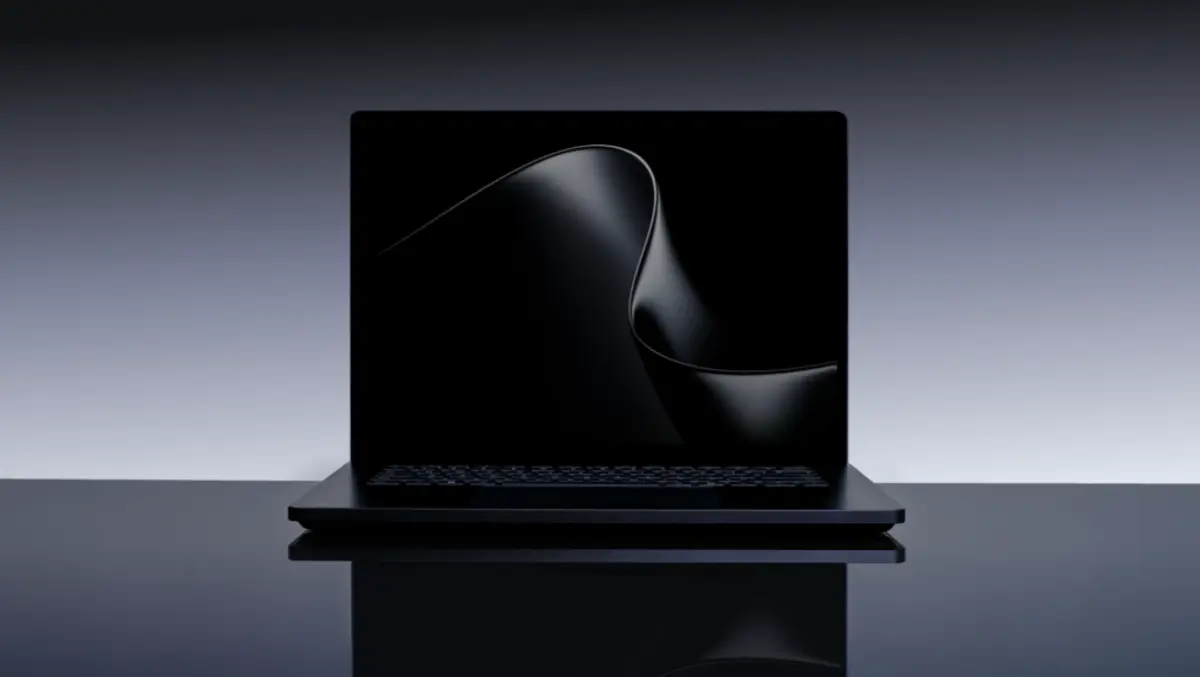
Among the first products named was Microsoft's Surface Laptop Ultra, which it positioned as a system for rendering, compiling and local AI work. Manufacturing partners also outlined their own models, including Asus ProArt laptops, Dell's XPS 16 Creator Edition, HP's OmniBook Ultra 16 and OmniBook X 14, Lenovo's Yoga Pro 9n and MSI's Prestige N16 Flip AI+.
The announcement also extended beyond portable PCs. Microsoft said it is scaling Windows to Nvidia DGX Station for Windows, based on the Nvidia GB300 Grace Blackwell Ultra Desktop Superchip, in a move intended to bring larger AI models and workstation-class development workloads to deskside Windows systems.
Pairing the GB300 Superchip with an additional Nvidia RTX Pro Blackwell Workstation GPU would allow developers to combine AI compute with ray-traced visualisation and simulation in one system, with access to Linux-based AI tools through Windows Subsystem for Linux, Microsoft said.
The broader message was that Microsoft wants Windows to serve as a common platform for AI workloads across consumer PCs, creator laptops and workstation-class machines. The aim is to let users run larger models locally, keep data on-device where needed and make AI computing a more routine part of Windows-based work.