

TP launches smart glasses tool to tackle technician shortage
Thu, 25th Jun 2026.webp)
TP has launched TP Reach in Australia to help address a shortage of skilled field service technicians. The system is aimed at industries including automotive, mining, utilities and infrastructure.
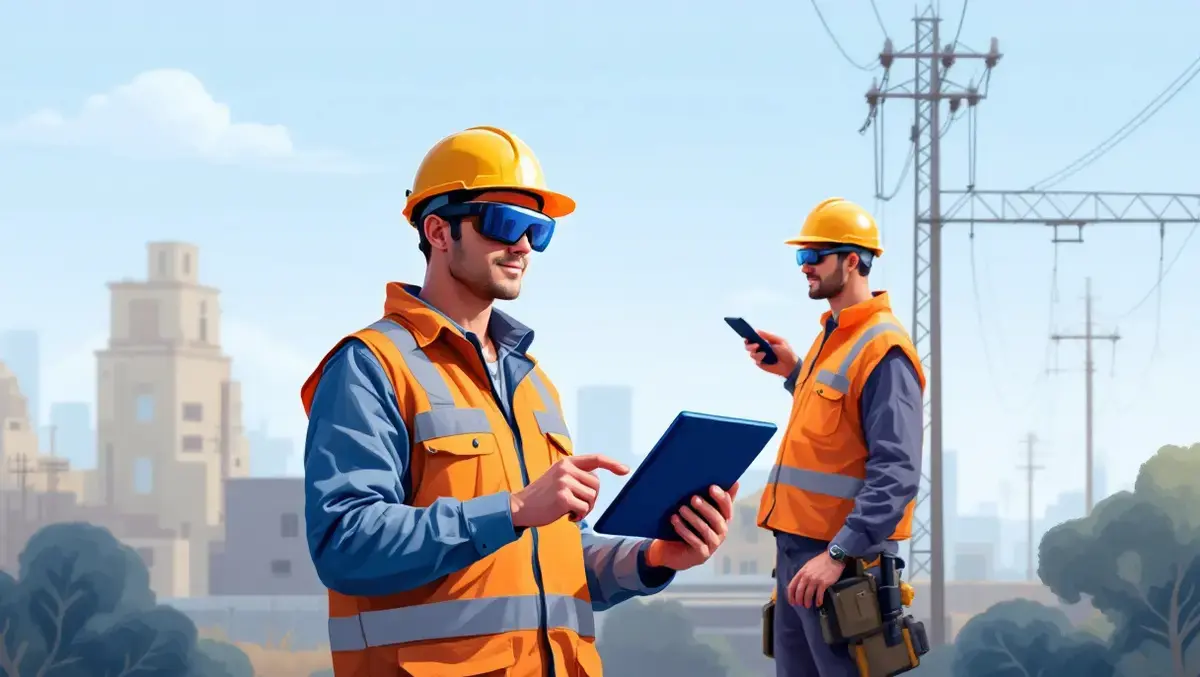
The product uses AI-enabled augmented reality smart glasses to connect less experienced frontline workers with remote senior engineers during repairs and maintenance. The headset shares the technician's view with an expert in another location, allowing guidance during on-site work without requiring the senior worker to travel.
Labour shortages are a growing issue across sectors that depend on field maintenance, as employers struggle to recruit new technicians and replace older workers who are retiring. The pressure is becoming more visible as newer systems such as EV charging networks add demand for specialist technical knowledge.
Companies risk longer maintenance delays and outages if they cannot transfer practical know-how to newer staff quickly enough. They are also looking for ways to keep experienced engineers involved after they stop travelling regularly to regional or remote sites.
Maurice Zicman, Vice President of CX Strategy at TP Australia, said the system is designed to close that gap by giving junior staff direct access to experienced support while on the job.
"Instead of an inexperienced or new graduate technician having to shadow senior engineers on site, TP Reach enables them to go into the field supported remotely by experts who can see exactly what they see through this augmented reality headset," Zicman said.
The hands-free aspect is central to the product's use in maintenance settings, where workers often need both hands available while dealing with complex equipment. Standard video calling tools are less suitable in those circumstances because technicians may need to hold a phone while trying to show a fault or carry out an adjustment.
"You can't safely repair or adjust equipment if you're holding a phone in one hand trying to show someone what you're doing," Zicman said.
The system also allows remote experts to view supporting material such as schematics, diagrams and repair sequences while guiding a job. That arrangement can help standardise repairs and support workers with less field experience.
"These glasses allow technicians to work hands-free and give the remote expert full visibility, along with access to schematics, diagrams and repair sequences in real time. Through smart glasses, live video and AR guidance, it improves accuracy, reduces downtime and enables faster issue resolution. It means fewer errors and significantly reduced training time for new technicians.
"Real-time collaboration reduces travel, improves first-time fix rates and streamlines scheduling, helping companies cut labour and logistics costs while maintaining high service quality.
"TP Reach serves as a bridge for technology-driven industries such as utilities and energy, telecommunications, healthcare, manufacturing and many more, to ensure that critical knowledge isn't lost as veteran engineers and technicians with decades of experience retire," Zicman said.
One area where this model is already being used more widely is electric vehicle infrastructure. As EV sales rise, charging networks require installation, servicing and fault diagnosis by technicians with specialist training, and employers are finding those skills are not always easy to source.
Remote support through smart glasses has been adopted by organisations including Volkswagen for work linked to EV charging infrastructure, according to TP. In that setting, senior engineers can direct technicians through repairs and maintenance tasks from another location, reducing the need to send specialist staff to every site.
TP said the technology has relevance beyond transport, pointing to medical equipment, telecommunications, manufacturing, consumer electronics and other sectors where field service work can be difficult to staff. The company argues that remote guidance can help businesses manage a thinner pool of skilled labour while preserving expertise that might otherwise leave the workforce.
That may also appeal to employers trying to retain veteran technicians who no longer want the physical demands or travel burden of regular site visits. Under a remote support model, those workers can continue to assist from a central location while newer technicians handle on-site tasks.
For companies with dispersed assets across regional Australia, the economics are also part of the case. Sending specialists long distances for relatively routine issues can add to downtime and labour costs, particularly where a less experienced local worker could complete the repair with direct oversight from an expert.
The broader question for industries facing technician shortages is whether systems like smart glasses become a standard feature of field maintenance rather than a niche tool. For now, TP is positioning TP Reach as a way to keep knowledge in circulation at a time when experienced workers are leaving faster than many sectors can replace them.