

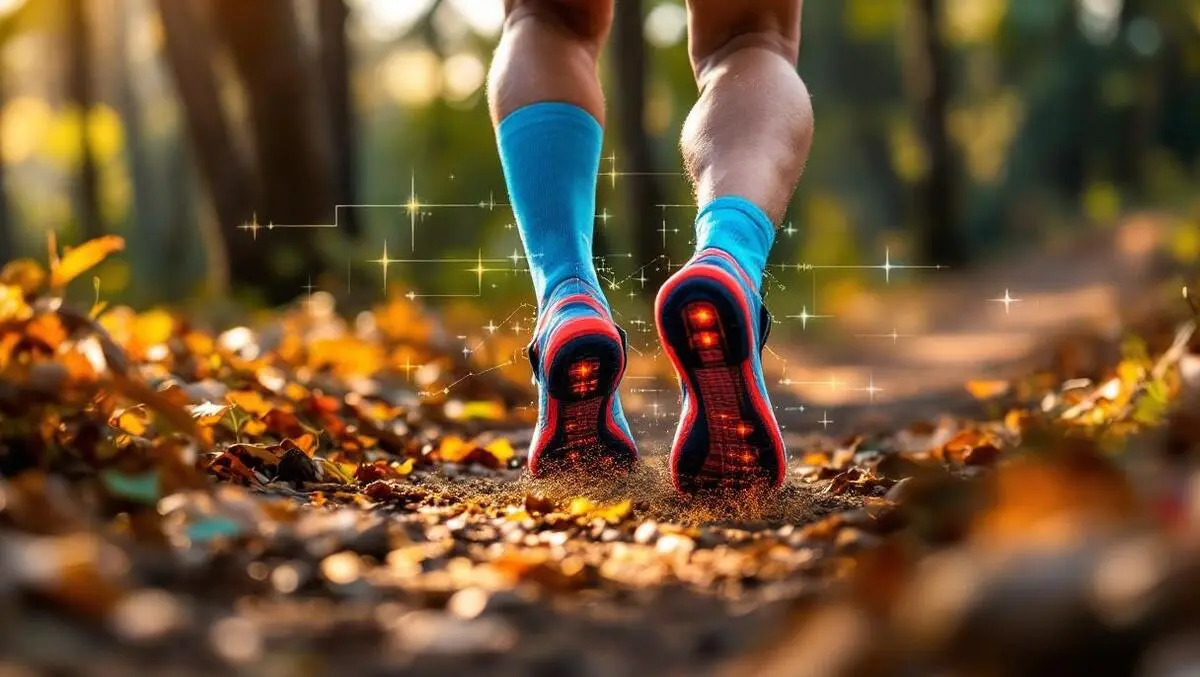
Wearable tech brings lab-grade biomechanics to trails
Tue, 8th Jul 2025
The University of Queensland has begun a research trial on a standardised mountain trail in Brisbane, comparing laboratory biomechanics data with measurements collected during real trail running using wearable technology from Irish SportsTech company Danu Sports.
The project focuses on gait transitions-the moments when runners switch between walking and running. Researchers will examine how those transitions differ between a controlled laboratory setting and outdoor terrain, where slope, surface and fatigue vary more naturally.
University of Queensland Research Fellow Dr Raimundo Sanchez designed the study and standardised a 1 km section of trail at Mt Coot-tha using high-precision geospatial tools. The work provides a repeatable outdoor route for measurement and comparison.
Lab and trail
The trial includes 15 athletes who complete biomechanical assessments both in the university laboratory and on the Mt Coot-tha route. Researchers will compare two measures commonly used in gait-transition studies.
One is Preferred Transition Speed, the speed at which an athlete naturally switches gaits. The other is Optimal Transition Speed, defined by the research team as the most biomechanically efficient transition point.
In the laboratory, participants run on a treadmill at four incline settings: 0°, 5°, 10° and 15°. The study lists equivalent grades of 0%, 8.75%, 17.63% and 26.79%.
Researchers then collect data from the same athletes on the outdoor trail under natural conditions. A set of wearables and positioning tools is used to capture comparable measures outside the lab.
Wearable measurement
Danu Sports has supplied its gait analysis system for the outdoor portion of the trial, including smart socks described by the company as FDA-approved.
Each sock includes integrated inertial measurement units combining an accelerometer, gyroscope and magnetometer, as well as 15 pressure sensors that record foot-pressure patterns during movement.
The sock data is paired with high-precision GPS to measure slope and velocity. Participants also wear chest straps for heart-rate data, and Danu's algorithms process the information for gait-cycle modelling.
The approach addresses a long-standing issue in sports science: laboratory results do not always match real-world performance. Trail running places specific demands on athletes because terrain can change quickly, slopes vary and footing can shift over short distances.
Interest in the study comes as trail-running organisations seek stronger evidence on performance, injury risk and technique choices in outdoor conditions. The University of Queensland team expects the dual-setting design to show where treadmill-based findings align with outdoor running-and where they diverge.
Olympic context
The project comes as trail running prepares a bid for exhibition sport status at the Brisbane 2032 Olympic and Paralympic Games. The prospect has increased attention on coaching methods and the measurement standards used to assess athletes across different environments.
Dr Sanchez described the research as an attempt to extend laboratory control into a setting that more closely matches competition conditions.
"For the very first time anywhere in the world we are bringing scientific control and precision to an outdoor trail running environment," said Dr Raimundo Sanchez, Research Fellow, University of Queensland.
"By enabling true locomotion studies in the wild, we can more accurately reflect the unique challenges and experiences of trail runners who travel over constantly changing terrain," he said.
Danu Sports Chief Executive Oisín Lennon said the work could have relevance beyond trail running and influence how federations monitor athletes away from indoor testing facilities.
"This research is a paradigm shift for all athletes, not just trail runners," said Oisín Lennon, CEO, Danu Sports.
"We're delivering lab-grade biomechanics out in the field. For sports federations and performance programs, that means truly understanding how athletes move under the pressures and conditions they actually compete in," he said.
The research team says the trial is halfway through data collection and has drawn attention from academic and sporting organisations outside Australia. The partners expect interest to continue as the dataset grows and more groups look for measurement approaches that translate more directly to training and competition.
Danu says its platform is also being used beyond sport, including in rehabilitation, orthopaedics, neurodegenerative disease research and sports medicine. Further studies are expected to apply similar wearable measurement approaches in outdoor and clinical environments.